What is the rainforest?
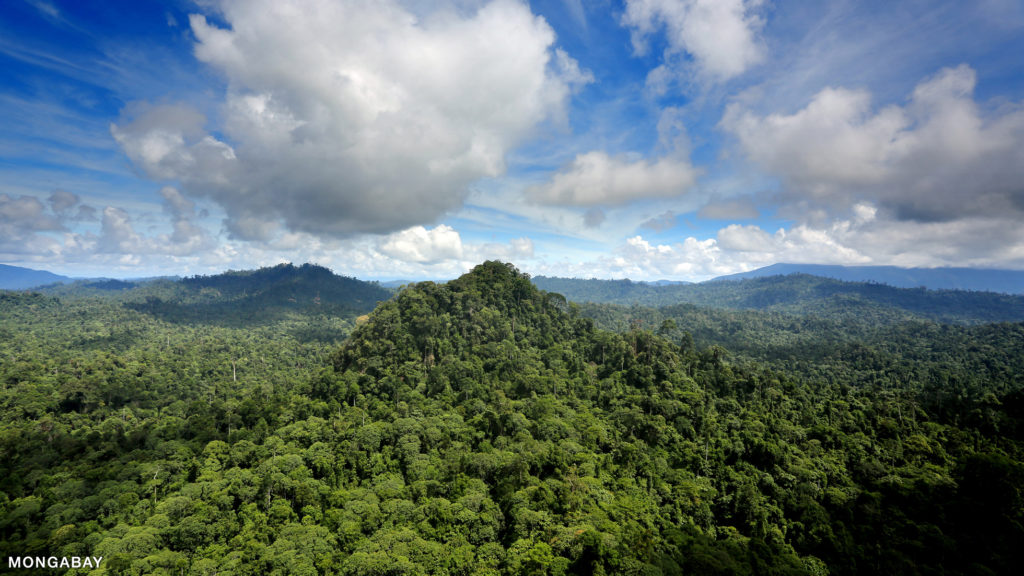
Tropical rainforests are forests with tall trees, warm climates, and lots of rain. In some rainforests it rains more than one inch nearly every day of the year!
Rainforests are found in Africa, Asia, Australia, and Central and South America. The largest rainforest in the world is the Amazon rainforest in South America.
Where are rainforests found?
Rainforests are found in the tropics, the region between the Tropic of Cancer and the Tropic of Capricorn, just above and below the Equator. In this tropic zone the sun is very strong and shines about the same amount of time every day all year long, keeping the climate warm and relatively stable.
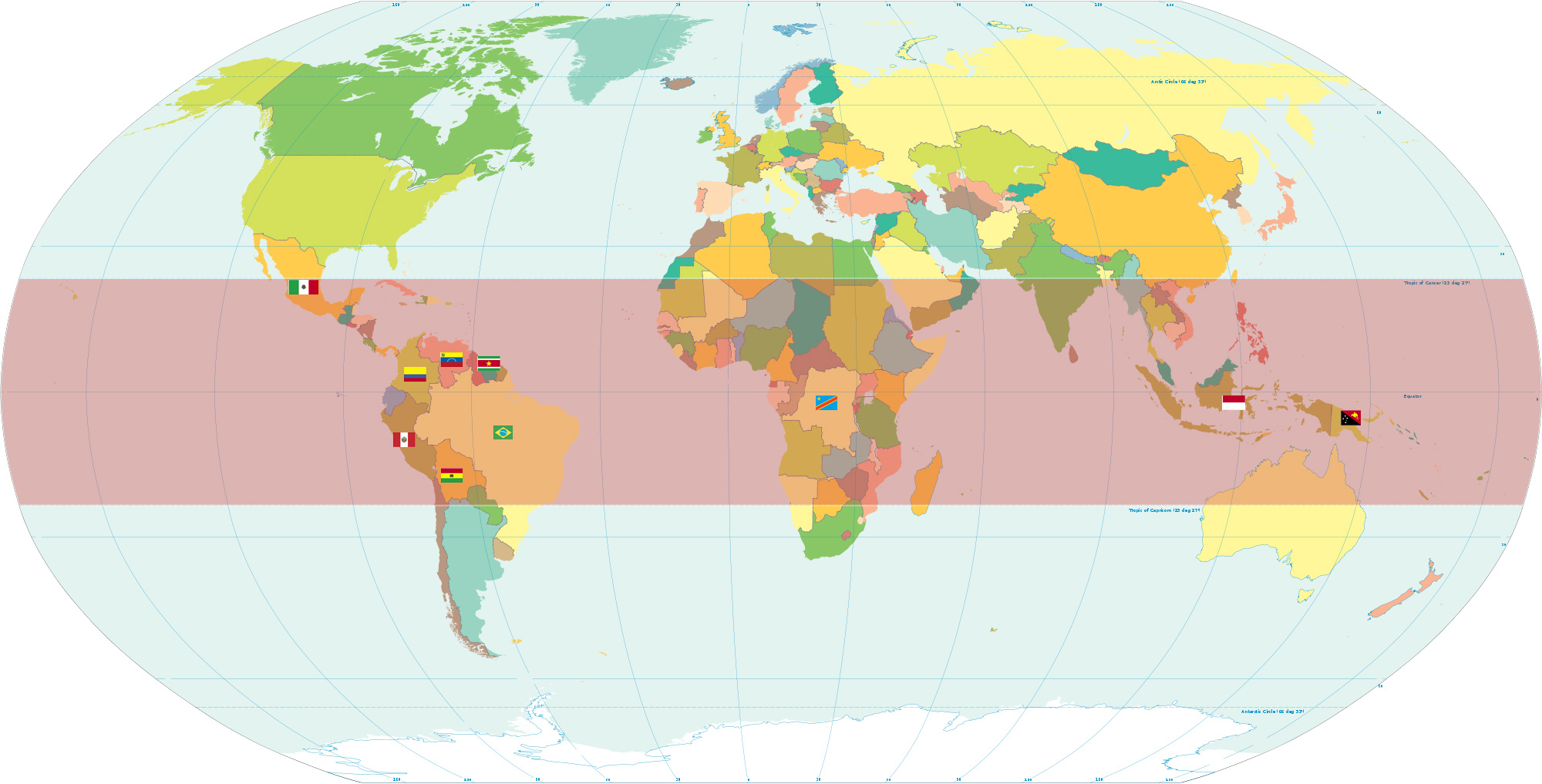
Many countries have tropical forests. The countries with the largest areas of tropical forest are (in order):
- Brazil
- Congo (Democratic Republic)
- Indonesia
- Peru
- Colombia
Other countries that have large areas of rainforest include Bolivia, Cameroon, Central African Republic, Ecuador, Gabon, Guyana, India, Laos, Malaysia, Mexico, Myanmar, Papua New Guinea, Republic of Congo, Suriname, and Venezuela.
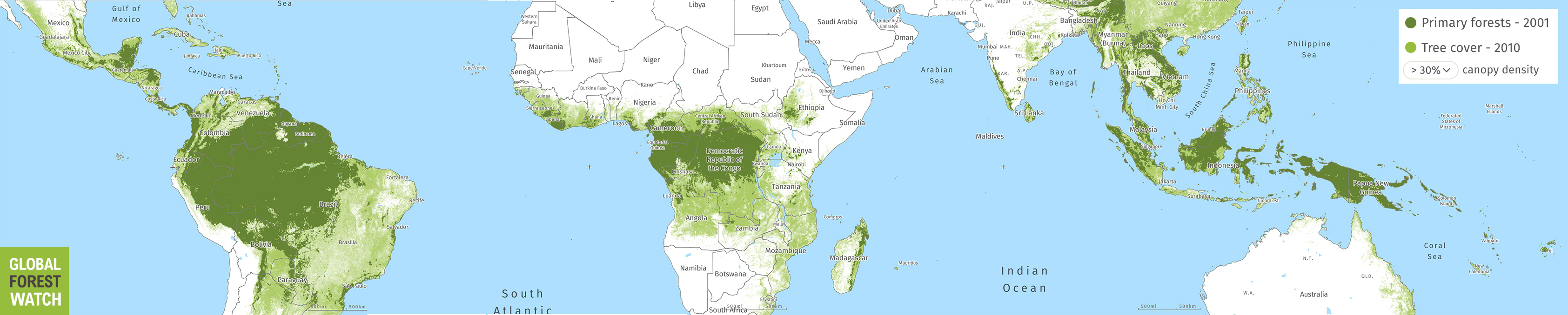
These are the world’s largest rainforests.
- Amazon: Includes parts of Bolivia, Brazil, Colombia, Ecuador, French Guiana, Guyana, Peru, Suriname, Venezuela
- Congo: Includes parts of Cameroon, Central African Republic, Democratic Republic of the Congo, Equatorial Guinea, Gabon, Republic of Congo
- Australiasia: Includes parts of Australia, Indonesian half of New Guinea, Papua New Guinea
- Sundaland: Includes parts of Brunei, Indonesia, Malaysia, Singapore
- Indo-Burma: Includes parts of Bangladesh, Cambodia, China, India, Laos, Myanmar, Thailand, Vietnam
- Mesoamerica: Includes parts of Belize, Costa Rica, El Salvador, Guatemala, Honduras, Mexico, Nicaragua, Panama
- Wallacea: Sulawesi and the Maluku islands in Indonesia
- West Africa: Includes parts of Benin, Cameroon, Côte d’Ivoire, Ghana, Guinea, Liberia, Nigeria, Sierra Leone, Togo
- Atlantic forest: Includes parts of Argentina, Brazil, Paraguay
- Choco: Includes parts of Colombia, Ecuador, Panama
Below is a chart that shows the world’s largest rainforests


What makes a rainforest?
Each rainforest is unique, but there are certain features common to all tropical rainforests.
- Location: rainforests lie in the tropics [map].
- Rainfall: rainforests receive at least 80 inches (200 cm) of rain per year.
- Canopy: rainforests have a canopy, which is the layer of branches and leaves formed by closely spaced rainforest trees [picture]. Most of the plants and animals in the rainforest live in the canopy. The canopy may be 100 feet (30 m) above the ground.
- Biodiversity: rainforests have a high level of biological diversity or “biodiversity”. Biodiversity is the name for all living things—like plants, animals, and fungi—found in an ecosystem. Scientists believe that about half of the plants and animals found on Earth’s land surface live in rainforests.
- Symbiotic relationships between species: species in the rainforest often work together. In a symbiotic relationship, two different species benefit by helping each other—you can think of it as a partnership. For example, some plants produce small housing structures and sugar for ants. In return the ants protect the plants from other insects that want to feed on the plant’s leaves [picture].
What is the canopy?
In the rainforest most plant and animal life is not found on the forest floor, but in the leafy world known as the canopy. The canopy, which may be over 100 feet (30 m) above the ground, is made up of the overlapping branches and leaves of rainforest trees. Scientists estimate that 60-90 percent of life in the rainforest is found in the trees, making this the richest habitat for plant and animal life. Many well-known animals including monkeys, frogs, lizards, birds, snakes, sloths, and small cats are found in the canopy.
The conditions of the canopy are very different from the conditions of the forest floor. During the day, the canopy is drier and hotter than other parts of the forest, and the plants and animals that live there are specially adapted for life in the trees. For example, because the amount of leaves in the canopy can make it difficult to see more than a few feet, many canopy animals rely on loud calls or lyrical songs for communication. Gaps between trees mean that some canopy animals fly, glide, or jump to move about in the treetops.
Scientists have long been interested in studying the canopy, but the height of trees made research difficult until recently. Today there special facilities with rope bridges, ladders, and towers to help scientists discover the secrets of the canopy. The canopy is just one of several vertical layers in the rainforest. Take a look at the diagram on the left to see the other layers (the overstory, understory, shrub layer, and forest floor).
The canopy is just one of several vertical layers in the rainforest. Take a look at the diagram on above to see the other layers (the overstory, understory, shrub layer, and forest floor).

The Rainforest Floor
The rainforest floor is often dark and humid due to constant shade from the canopy’s leaves. Despite its constant shade, the rainforest floor is an important part of the forest ecosystem.
The forest floor is where decomposition takes place. Decomposition is the process by which fungi and microorganisms break down dead plants and animals and recycle essential materials and nutrients.
Also, many of the largest rainforest animals are found on the forest floor. Some of these are elephants (in Asia), the tapir (Southeast Asia and Central and South America), tigers (Asia), and the jaguar (Central and South America).
Rainforest rivers
Due to the tremendous amount of rainfall they receive, tropical rainforests have some of the largest rivers in the world, like the Amazon, Mekong, Orinoco, and Congo. These mega-rivers are fed by countless smaller tributaries, streams, and creeks. For example, the Amazon alone has some 1,100 tributaries, 17 of which are over 1,000 miles (1,600 kilometers) long!
The Amazon, which drains about 40 percent of the South American continent, is the world’s largest river. It carries more than five times the water as the world’s second largest river, the Congo, and twelve times that of the Mississippi. During the high water season, the Amazon river’s mouth may be 300 miles wide and every day up to 7.2 million Olympic swimming pools’ worth of water is discharged into the Atlantic Ocean.
Chapter review questions
- What are three characteristics of tropical rainforests?
- What is the world’s largest rainforests?
- Where are rainforests found?
- What are five countries that have tropical rainforests?
- What country has the largest area of rainforest?
- What is the name of the world’s largest rainforest?
- What is the largest rainforest in Africa called?
- What are some common features of all rainforests?
- Where are tropical rainforests found?
- About what share of Earth’s land species are found in tropical rainforests?
- What’s an example of a symbiotic relationship?
- What is the forest canopy?
- How are the conditions of the rainforest canopy different from the forest floor?
- What are some ways animals move about in the canopy?
- Describe the conditions of at the ground level in the rainforest.
- What is decomposition?
- What are some examples of animals that live on the ground level of the rainforest?
- What is the world’s largest river?
- Where is the world’s biggest river located? On what continent?
Additional resources
- What are characteristics of rainforests? From our main rainforests web site
- What are tropical rainforests? From our main rainforests web site
- The world’s largest rainforests From our main rainforests web site
- Rainforest facts From our main rainforests web site
- The Amazon Rainforest From our main rainforests web site
- The Congo Rainforest From our main rainforests web site
- Rainforest canopy? From our main rainforests web site
- Rainforest floor From our main rainforests web site
- Rainforest waters From our main rainforests web site
- The Amazon Rainforest From our main rainforests web site
- Photos of rivers From our photo web site