Categories




Categories
Down the river of blood
Madagascar has been called the “Great Red Island,” and from space, astronauts have remarked it looks like it is bleeding to death. Soil conditions and poorly vegetated hillsides mean Madagascar loses more topsoil per hectare than any country in the world. Living in one of the poorest nations on Earth, the people of Madagascar can ill afford this loss. In 2004 I set off to see one of the rivers that is carrying away the island’s soils: the Manambolo of western Madagascar.

My journey begins in the capital city, Antananarivo, better known as “Tana.” Tana is located in the central highlands of Madagascar where the climate is mild and the people, called the Merina, look ethnically Indonesian. Tana is quite unlike any other city I have ever visited, with colorful houses decorating the hillsides, extensive rice paddies running through sections of the town, and bustling streets full of cars and carts drawn by the humped cattle known as zebu.
With the help of an outfitter I charter a Cessna and head west with my Tana-based guide, Benja, and our pilot. We fly over a largely forest-less landscape pockmarked with lavaka, deeply eroded gullies that bleed red laterite soils into creeks and rivers. While lavaka is often cited as a consequence of deforestation, they form primarily as a result of other factors, and vegetation clearing is now believed to play a secondary role in the expansion of such gullies.
After about an hour and a half of this, the landscape changes and we pass over a large valley. Here we have the first sighting of the river that will be our home and mode of transportation for the next few days, the Manambolo. The Manambolo originates in the highlands of Madagascar (“Haut plateau”), about 130 kilometers (80 miles) west of Tana. The Manambolo, deep red-orange in color from eroded sediment, descends through a largely deforested landscape as it heads toward the Mozambique Channel.

We fly beyond the Manambolo, past a landscape dotted with plumes of smoke from land-clearing fires, over Bemaraha National Park. Bemaraha is one of Madagascar’s newest parks. It was opened to the public only in 1998. The 1,520-square-kilometer (590-square-mile) Bemaraha is best known for its tsingy — sharp limestone pinnacles that may reach 45 meters (150 feet) in height. Flying over the tsingy is an unforgettable experience. The pilot dives so low that we just barely clear the sharp spires. We spot sifaka lemurs — the famed “dancing” lemurs — and birds scattering from the trees. After a couple of flyovers we head east toward the landing strip outside a satellite village of the town of Ankavandra.
As we come in for our approach to the grassy landing field, children sprint from their huts knowing that a vazaha, a non-pejorative term for a foreigner, is soon to arrive.
Sure enough, upon landing, a couple of dozens kids mob the plane. It is immediately evident that this is an unforgiving land. Despite their bright eyes, beaming smiles and playful nature, most of the children look undernourished. They are slender and small for their age, and many have distended bellies and show other signs of illness. Their condition is not unusual for the country; about 70 percent of Madagascar’s population lives below the poverty line, while nearly half of its children under 5 years of age are malnourished.

We hire a couple of porters from the village to help with the gear and make arrangements with two canoe men, Betsara and Max. As we load the boats I practice my Malagasy — the native tongue of Madagascar as well as the name for the people of the country — with some of the kids who want to be involved in the action.
Our pirogues, supplied by a tour operator that specializes in Manambolo River trips, are about 4 meters (13 feet) long and are navigable in water less than 30 centimeters (1 foot) deep — which is important given the low level of the river at this time of year.
The landscape around the river is pretty desolate, mostly scrub with scattered trees. Occasionally the river will have 10- to 15–meter (30- to 50-foot) cliffs, which are striated with layers of white, red and green clays. Sometimes we pass by children along the riverbanks and there are scattered huts. At one point we pass a pirogue with three boys, one of them playing a song with a string guitar as the other two sing along in perfect harmony. I’ve discovered in my travels around Madagascar that music often accompanies daily rituals in both rural areas and towns.


We camp on a giant sandbank. As night falls we are besieged by thousands of insects: large gnat-like miseries, thumbnail-sized black beetles that have an affinity for hair, and buzzing but dimwitted cicadas. These flock around our meager light source, our candles, and are drawn to the light reflecting off my light skin and my rice. I get a full week’s allowance of chitin, the material from which an insect’s exoskeleton is formed, from the creatures in my meal. After a lively discussion in broken English and Malagasy on politics and the realities of life in America, I head for the refuge of the tent.
Back on the river we encounter a young Nile crocodile. The Manambolo was once full of crocodiles, but due to hunting for their skins they are now considered a threatened species in Madagascar. Here water levels are too low to support adult crocs, but lower down the river, below the canyon, crocodiles are still abundant.
We stop at Tsianaloka, a village consisting of around 10 huts. The children here do not see many vazaha. Many of the kids are thin and most have signs of malnutrition. No one I meet in the village, including the young adults, knows their age.


We stop for lunch under a grove of mango trees, behind which there is burned-out scrubland and ash littering the ground. Betsara and Max talk with some men passing in a pirogue. Afterward they seem a bit unsettled, but there is no indication why they are concerned. We press onward and battle a fierce wind before Betsara indicates we should pull off the river.
As we attempt to set up the tents in the wind, an unsuccessful endeavor for the moment, Benja explains the reason for the uneasiness: the Dahalo may be in the area planning an ambush.
The Dahalo are bandits usually found in mountainous regions of Madagascar. Their preferred target is zebu cattle, but they will take almost anything when they raid villages and ambush people traveling by foot or pirogue. The Dahalo are typically armed with shotguns and carefully plan their attacks. Like the Kamajors of West Africa, the Dahalo rely on an elaborate pre-raid ritual that they, and the local people, believe makes them invincible to bullets. Villagers are easy targets for these bandits because of their isolation, beliefs strongly rooted in tradition, and lack of weapons, and the Dahalo count on intimidation to keep the villagers from taking effective protective actions. Police are said to avoid the outer areas where the Dahalo prey, either being paid to stay away or fearing for their safety. The Dahalo are an amorphous group and it is likely that some are often members of the very communities they raid. In some areas a man is required to steal a neighbor’s zebu before he can take a woman’s hand in marriage.

Max and Betsara were attacked by the Dahalo a few weeks earlier. The bandits took all their cooking supplies and warned them not to guide vazaha down the river. It is said that the only thing the Dahalo fear are vazaha, believing them to have superior weapons. Nevertheless it is a tense night and we take turns keeping watch. The wind and blowing sand add to the discomfort — sand for dinner and in our hair and eyes — but we are able to set up one tent behind a barricade dug in the sand and protected by the canoes.
At night the sand comes alive with insects. There are giant crickets longer than 5-centimeters (2 inches), small yellow scorpions, enormous earwigs, and a plethora of other arthropods.
In the morning there’s sand in everything. The bounty of insect life from the previous night has taken refuge in all our equipment, and as we pack, I’m frequently startled by hidden scorpions.


At breakfast we’re joined by a local Sakalava boy who’s finely dressed. He tells us that the Dahalo have crossed the river and appeared to be preparing an ambush in the late afternoon. Thus the concerns of Max and Betsara the previous afternoon were warranted, and they plan to take special precautions on their return trip upriver.
As we move downstream the landscape becomes more canyon-like. Increasingly there are little pockets of forest and we encounter more local people on the river.
We pass some fasana, or tombs constructed with neatly piled rock. These are the graves of the Sakalava, the ethnic group that lives in this region and most of western Madagascar. In the distance there is a mountain where local people bury their dead. Once you pass the mountain it becomes a serious fady, or taboo, to point with your finger. Instead, you are supposed to point with your knuckle, paddle or elbow when trying to call attention to something. Pointing with your finger angers the razana, or spirits of the dead, and offenders must make an offering.

We reach the Manambolo canyon, and it is spectacular, with colorful sheer walls and deciduous forests. We camp at a picturesque spot where a clearwater stream enters the muddy flow of the Manambolo. As we unload the pirogues, bright yellow and teal butterflies flutter about and black kites circle above.
I go for a walk up the clearwater creek (Max and Betsara call it “Oly”) and find a gorgeous pool full of several kinds of fish. Seeing these fish is a special experience; Madagascar’s native species are increasingly endangered due to habitat loss and degradation from deforestation and soil erosion. Additionally, the introduction of exotic species, specifically tilapia, has absolutely decimated native fish stocks. In some rivers, as much as 99 percent of the fish collected in surveys are now tilapia species, and several of Madagascar’s unique fish — especially cichlids, intelligent fish that care for their young — are no longer recorded in the wild.

While walking back to the camp site I see a group of Decken’s sifaka leaping about in trees high up on the ridge above our tents. We watch these lemurs as the sun sets.
Primarily tree-dwelling, sifakas are somewhat awkward on the ground due to their splayed feet. Since trees in their habitat are often dispersed, sifakas cross open ground by sashaying on their hind legs with arms aloft. This behavior has made sifakas famous the world-over as “dancing lemurs.”
Lemurs, a group of primates found only on Madagascar, are today highly threatened by habitat loss and hunting. At least 17 of the island’s lemur species have gone extinct since the arrival of humans less than 2,000 years ago.


In the morning, Betsara, Benja and I hike up Oly Canyon creek. The creek runs over white limestone rock, through channels and shoots, and over small waterfalls into turquoise pools. Pristine deciduous forests surround us. The trees have orange and yellow blossoms, and are alive with singing birds. We encounter a group of red-fronted brown lemurs that have come down to the river to drink. They grunt at us as we continue upstream through palm-lined pools full of exquisite Madagascar lace plant in bloom, a beautiful species often kept in aquariums, and other aquatic plants.
After a couple of hours of walking we come to an obscenely beautiful place, a 6-meter (20-foot) waterfall pouring into a blue pool. We spend some time swimming in the pool and jumping off the falls.

We press further down the river through the canyon and past several waterfalls and another group of red-fronted brown lemurs. The canyon continues to be gorgeous.
We see more locals in the lower part of the canyon. Some are visiting the remains of their ancestors stored in caves in the cliffs, while others are tending to their riverside rice patches. We stop to talk with a family growing rice on a sandbar. The family will stay long enough to grow one crop of rice before the river levels rise and inundate the sandbar.


Rice is the staple of the Malagasy diet, and most people in Madagascar eat it three times a day. Madagascar once grew enough rice to feed itself, but environmental degradation and resulting soil erosion has diminished the country’s agricultural capacity. Today Madagascar relies on imports from other countries to feed its population.
Toward the village of Bekopaka the wind picks up significantly, right as we hit a long stretch of slack water. We make slow progress through an area that is interesting geologically, with limestone slabs pancaked atop one another and then eroded by the river. These create bizarre rock formations and caves.

The village of Bekopaka is our destination. Here we’ll camp and then visit the limestone tsingy up close. As we drag our gear across the sandbar and up to our campsite, I can’t help but think about the beauty of the canyon. I’m already salivating at the idea of returning to explore more of the Manambolo’s side canyons and creeks. A place like the Manambolo reminds visitors that there are wildlands worth protecting, but also serves as a microcosm for some of the challenges facing conservation on a global scale.
Categories
Challenging an illegal logging regime
It is easy to forget that change starts with one person. In a world that is increasingly connected through mobile phones and the internet, especially social media, it is easier than ever before for someone with an idea to spread it rapidly around the world. My website, Mongabay.com, has served as a conduit for disseminating these messages and having an impact. One of the best examples comes from my favorite place to visit: Madagascar.
Madagascar is renowned for its biological richness. Located off the eastern coast of southern Africa and slightly larger than California, the island has an eclectic collection of plants and animals, more than 80 percent of which are found nowhere else in the world.
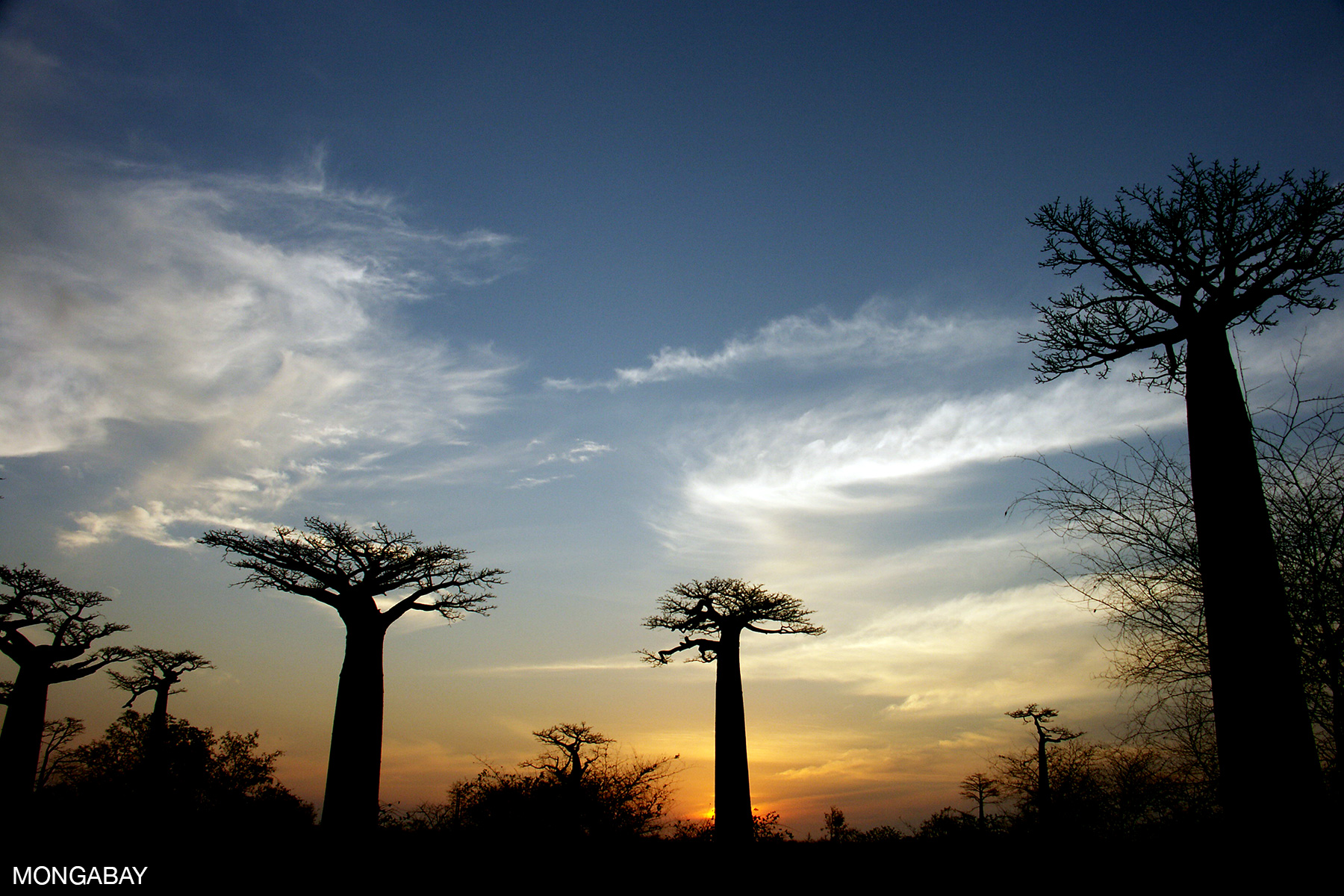
Madagascar is home to such evolutionary oddities as the fossa, a carnivorous mammal that looks like a cross between a puma and a dog but is closely related to the mongoose; the indri, a cat-sized lemur whose haunting song resembles that of the humpback whale; the sifaka, a lemur that “swears” rudely but moves across open ground like a ballet dancer; brilliantly colored chameleons and day geckos; and cryptic leaf-tailed geckos, which are nearly impossible to distinguish from bark or moss. It has baobab trees that look like they’ve been planted upside down; the rosy periwinkle, a delicate flower used to cure pediatric leukemia and Hodgkin’s disease; and an entire desert ecosystem consisting of just spiny plants, none of which are cacti. Accordingly, scientists have made the island, dubbed the Eighth Continent, a top conservation priority.
But Madagascar’s biological bounty was besieged in 2009 following a political crisis that saw its president chased into exile at gunpoint; a collapse in its civil service, including its park management system; and evaporation of donor funds that provide half the government’s annual budget. In the absence of governance, organized gangs ransacked the island’s biological treasures, including precious hardwoods and endangered lemurs from protected rainforests, and frightened away tourists, who provide a critical economic incentive for conservation.
[close-parallax-content][parallax-img imagepath=’https://mongabay-images.s3.amazonaws.com/1800/madagascar/madagascar_masoala_0549.jpg’ alt=’Rainforest on the Masoala Peninsula’ img_caption=’Rainforest on the Masoala Peninsula, where rosewood poaching was worst during the 2009-2010 crisis.’ title_color=’#FFF’][open-parallax-content]
Watching the carnage unfold was devastating. But stopping it seemed impossible since the coup leaders were complicit in the carnage. Violence limited the possibility of protest on the ground, and conservation groups went silent, not wanting to put their employees or projects at risk.
But I couldn’t sit by and watch Madagascar’s biological heritage go the way of the elephant bird, a species that dwarfed the ostrich but was killed off by humans in the past 500 years. After all, these were the forests that inspired Mongabay: the island of Nosy Mangabe lies just off the coast of where the worst logging was happening.
During the turmoil, I talked nearly daily with my network of Madagascar friends. The outlook was bleak.


But we were getting good information from informants on the ground. I began to learn more about the trafficking. European shipping companies were carrying rosewood logs out of ports in northeastern Madagascar. From there, most of the timber was going to China, where it was turned into fancy furniture, including, believe it or not, million-dollar beds.
The fact that European shipping companies were involved seemed like an opportunity for impact. One of my friends, Derek, had already written to the companies. All except one had agreed to stop carrying rosewood. But the lone holdout, Delmas, a French shipping line, was making up for their exit from the market: it was carrying tens of millions of dollars’ worth of timber. We would have to go after Delmas in such a way that it would have no choice but to stop carrying Madagascar’s rainforests away in shipping containers.
I got word that a major shipment, worth an estimated $20 million to $80 million, was planned for Dec. 21, 2009. I reached out to my network of contacts, including Forests.org, an online activist group that barrages targets with complaints sent via email. At the same time I contacted associates of the French delegation to the climate talks in Copenhagen. France had taken a position against illegal logging at the climate talks, arguing that rainforest conservation offered a cost-effective way to reduce greenhouse gas emissions. I asked how France could take this position at a time when its own companies were facilitating illegal logging in Madagascar. Lastly I reached out to a number of journalists about the shipment, but it was surprisingly difficult to get mainstream media to take an interest in the story. I was told rosewood had already been covered or was inconsequential.
Two out of three seemed to work. The combination of an avalanche of emails and diplomatic complaints forced Delmas to leave port in late December 2009 without any timber. A representative from Delmas said afterward that transporting the timber wasn’t worth the damage to its reputation.
But the reprieve didn’t last long. On Dec. 31, 2009, the transitional authority led by Andry Rajoelina allowed the export of rosewood, signaling to loggers that they could now cash in on their efforts. Immediately following the decree, reports on the ground indicated an upswing in logging activity in Masoala and Makira national parks. In the midst of a cash crunch, Rajoelina’s government was apparently selling out Madagascar’s forests to finance an election that it hoped would validate its seizure of power.
Amazingly, no company would carry the timber. The damage from the campaign was such that rosewood had become toxic. It was not until the transitional authority exerted heavy pressure on Delmas that the company agreed to take some timber, three months later, and the rosewood trade resumed at scale.


But that proved to be a mistake. After a single timber shipment left Vohemar, a port in northeastern Madagascar where large stockpiles of rosewood are held, campaigners relaunched their email advocacy efforts. At the same time, environmental groups Global Witness and the Environmental Investigation Agency (EIA) launched a public appeal to the governments of France and Madagascar.
Seeing this as a critical moment, I went full throttle in my efforts. I knew this approach could prevent me from ever setting foot in Madagascar again, but I had to proceed. I deepened my reporting on the transitional leaders, highlighting an undercover video that linked them to the illegal rosewood trade. The rosewood traffickers tried to fight back: cyberattacks against were launched against Mongabay and Wildmadagascar the day the uproar reached its peak. The aim was to shut down my sites by flooding them with denial-of-service attacks while simultaneously complaining to Amazon, my web host, that I was engaged in illegal activity.
But it was too late: the concerns were spotlighted in the national and international press, putting pressure on Madagascar’s transitional government. The outcry was so intense that the transitional government was forced to reinstate a ban on rosewood logging and exports, slowing down an illicit industry that had been destroying communities, wildlife and forests.
Madagascar’s leadership was particularly unhappy with the outcome — I was told Rajoelina called me a “bastard” for Mongabay’s reporting on the rosewood crisis.


Making an impact on rosewood trafficking in Madagascar didn’t require particularly advanced technology. It started with an email reaching the right people with the right message. Maybe next time it will be a Facebook post, a text message, a tweet, or a YouTube video.
The power of these media is clear. With edgy YouTube videos, Greenpeace virtually shut down the Brazilian beef industry for months in 2009 and forced Indonesia’s largest palm oil company to adopt a forest protection plan in 2010.
Categories
A disastrous trip in Madagascar
Madagascar also has great frogs, but what fascinated me about the island was a more unusual type of beast: the chameleon. Since the first time I laid eyes on a chameleon — with its otherworldly eyes, incredible tongue, dinosaur-like body shape, and Crayola colors — I was obsessed with Madagascar. My dream was to someday travel to that bizarre land of upside down trees, monkey-like lemurs, and the world’s biggest variety of chameleons.


But lying off the southeastern coast of Africa, Madagascar is very far away from my hometown of San Francisco, so my journey would have to wait. Throughout my childhood and adolescent years I devoured everything I could about Madagascar: books, magazines, videos, documentaries. I squirreled away money from summer jobs, birthdays and the Tooth Fairy, so that someday I could fulfill my dream. While many of my friends had never heard of the place, I could name nearly all the known lemurs (the number has more than doubled since then, making it more difficult).
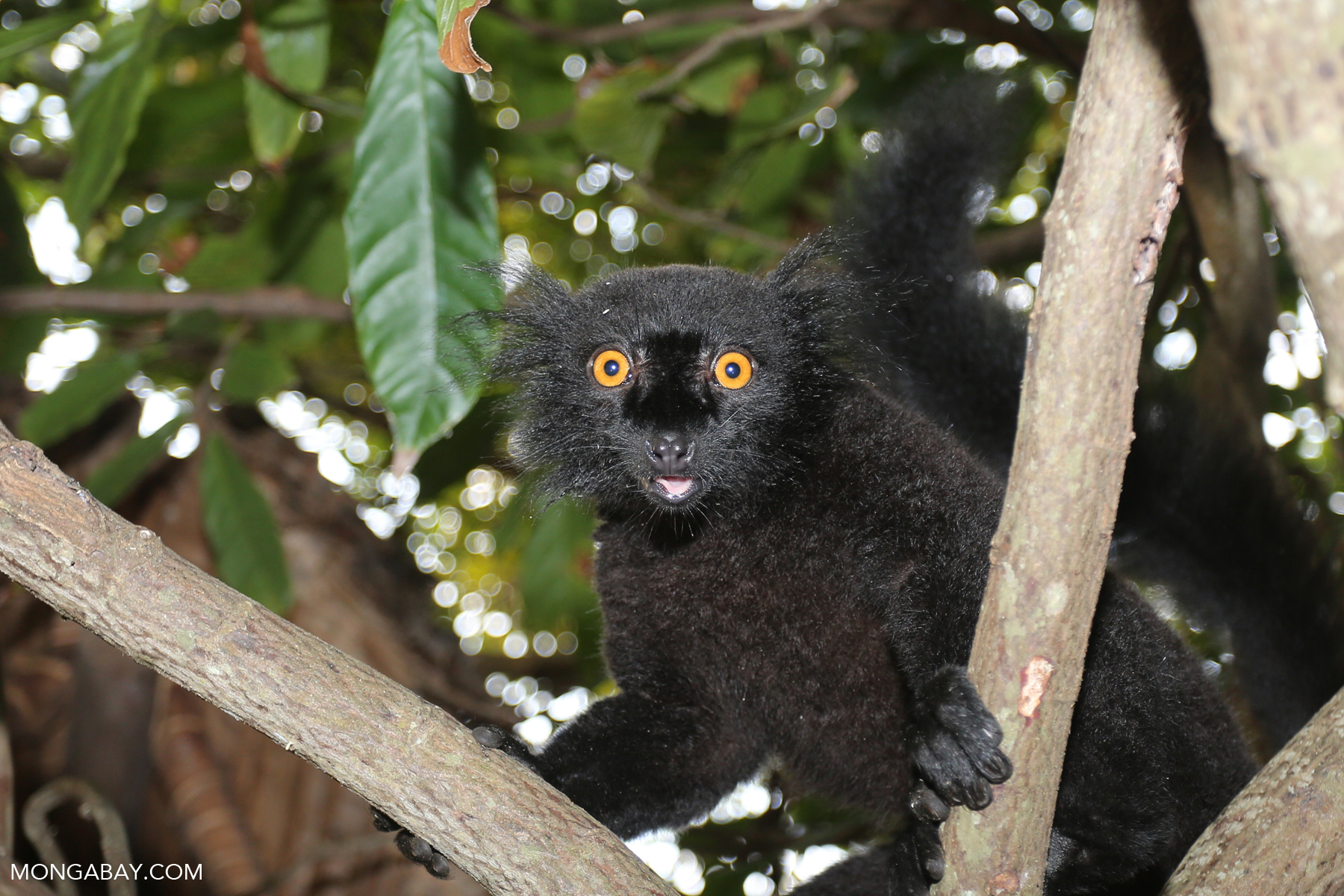
By my first year of college, I had amassed enough money and international travel experiences to make a trip to Madagascar. I signed up for an Earthwatch trip to help a researcher study black lemurs on Nosy Komba, a tiny island off another island off Madagascar. Earthwatch, which allows tourists to help a scientist in the field collecting data about his or her research subject, seemed liked the perfect introduction to Madagascar. After two weeks working on Nosy Komba, I would set off to see the rest of Madagascar, or at least as much as I could see in three-and-a-half weeks. Chameleons, lemurs and upside-down trees, here I come.
But before I could depart for Madagascar, there was the issue of raising enough money for the entire trip as well as preparing for my eventual entry into the “real world” — finding a job after graduation. So I spent the first half of the summer working for a big management-consulting firm. The work was challenging and intellectually stimulating to a degree, but it wasn’t what I envisioned myself doing in the long term. Like my schoolmates, almost none of my colleagues at the firm could place Madagascar on a map or distinguish a lemur from a monkey. Management consulting obviously wasn’t the place for me.
[close-parallax-content][parallax-img imagepath=’https://imgs.mongabay.com/wp-content/uploads/sites/20/2018/11/11204054/madagascar_nosy_komba_0016x_2400px.jpg’ alt=’Beach on Nosy Komba. Photo by Rhett A. Butler’ img_caption=’Beach on Nosy Komba. Photo by Rhett A. Butler’ title_color=’#FFF’][open-parallax-content]
If you dig a hole through the center of the Earth from San Francisco you wouldn’t end up in China. You’d end up in the middle of the Indian Ocean. But the closest major land mass would be Madagascar. In other words, the big island is a long way from home. Still, getting to Madagascar in the late 1990s was surprisingly direct: just two flights, with a stop in Paris. But my mother, concerned I would miss the flight and possibly end up on the Russian carrier with a dodgy safety record, had me stay in Paris for a few days. Between my inability to sleep on planes, the time change, my desire to explore a new city, and my excitement about being so close to realizing a lifelong dream, I didn’t get much sleep in Paris. By the time I reached Nosy Komba, that island off an island off Madagascar, I essentially hadn’t slept in four days. I was a walking zombie to the point where I nearly nodded off into my soup at dinner.
Going to bed that night I didn’t take my normal precautions of booby-trapping my hut. When I travel to places with uncertain security I take safety measures until I get to know a few people and the surroundings. I tie strings around window latches, use a rubber wedge under the door, and secure or hide my bags. Whether or not this is a wise idea is another question: would I really want to make life difficult for an intruder if he went through the trouble of breaking into my room?
In any case, I didn’t do any of these things that night; I was on the verge of collapse from exhaustion. I put my passport and an envelope full of money under the pillow and crashed.
A couple of hours later I woke to a disturbing sound: rustling, like someone was fumbling through bags. Was the noise coming from within the hut, a neighboring hut, or outside? I couldn’t tell; it was pitch black and there was no electricity. My flashlights were still packed.
As I strained to see into the darkness that lay beyond my mosquito net, my door suddenly slammed and I heard the sound of bare feet on packed earth.
I jumped up, untangled myself from the mosquito net, and ran over to where my bags had been. There was nothing.
I opened the door to my hut and ran out. It was really dark. I ran down a path into the middle of the village, but since I had arrived at dark I had no idea where to go. There was no sign of anyone.
Defeated, I went back to the hut. As I got back into bed, I thought maybe this was a dream. After all, I was on Lariam, an antimalarial drug notorious for causing strange dreams and, in extreme cases, hallucinations. Maybe once I was awake everything would be fine.

A few hours later I awoke to the menagerie of village sounds: roosters crowing, pots being clanked and scrubbed, and voices. I remembered having a vivid dream about someone entering my hut and stealing my bags. I untucked the mosquito net.
To my horror, there were no bags.
Over the course of my next five weeks in Madagascar, I was the victim of an attempted mugging, survived a boat capsizing, was interrogated by police and the military, experienced horrible food poisoning, witnessed a terrible car accident, and missed my flight home.
Yet some good things happened. I saw more chameleons than I could count, met inspirational people, experienced incredible kindness, and spotted nearly three dozen types of lemurs, including the strangest of them all: the elusive aye-aye. Not once, but on three occasions in the wild.
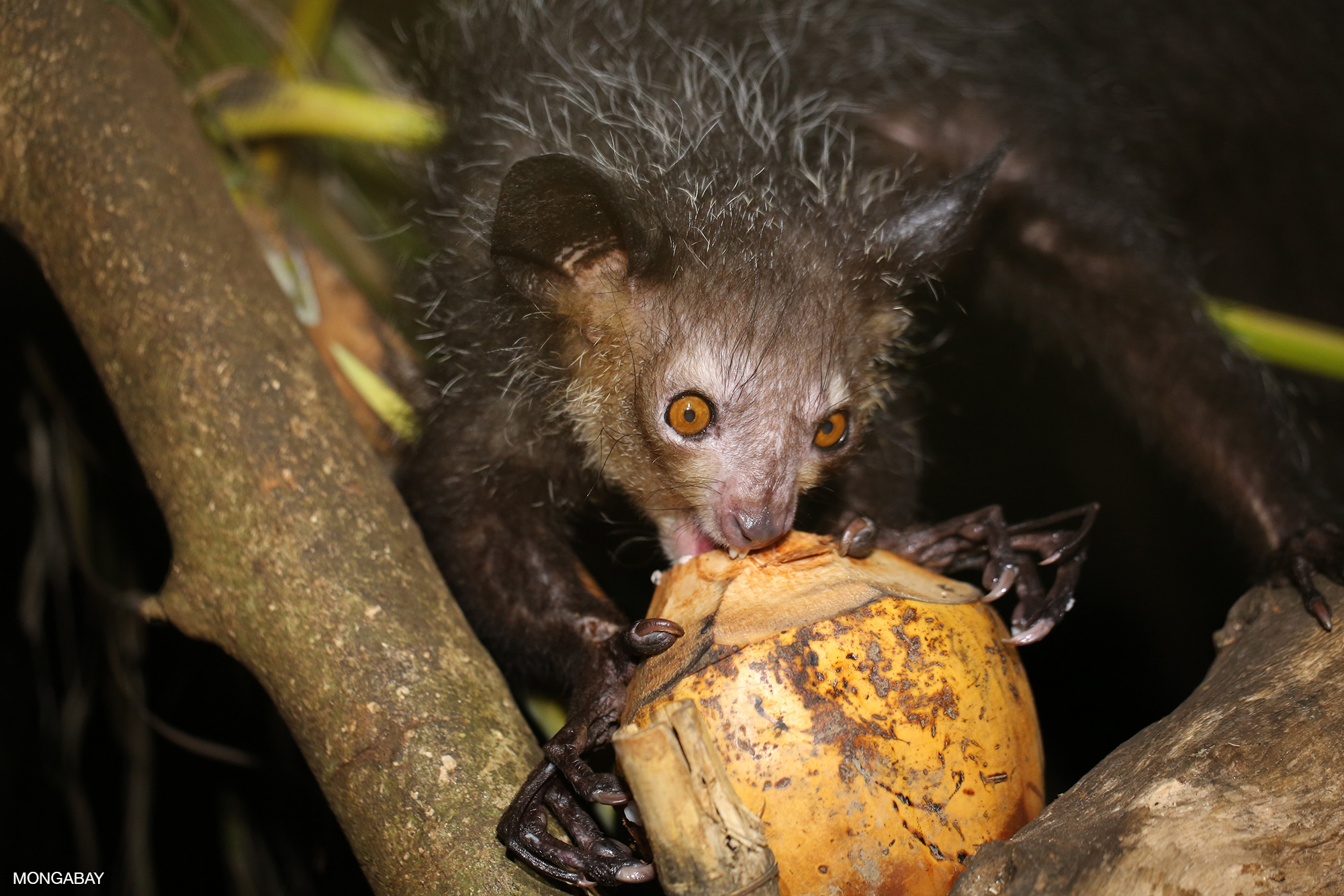
After that introduction, a reasonable person would probably say, one trip to Madagascar is enough. But I’m not a reasonable person when it comes to Madagascar. I vowed to return. After all, a second trip couldn’t possibly be worse than the first, could it?
In 2004, I fulfilled my pledge and retuned to Madagascar, a trip that set in motion my future involvement in what I consider the world’s most interesting country. Upon my return, I officially launched a new website, WildMadagascar.org, which would go on to have a real impact and land me in some trouble. Details of that experience will come in a later post, but the context ties in with this reporting.

Categories
Dodging charging elephants
One of the most popular tourist destinations in East Africa is Kenya’s Maasai Mara,. The Maasai Mara, a tract of savanna, is famous for its abundant wildlife, especially large populations of wildebeest and zebra. But its popularity has taken a toll: throngs of tourist buses now surround lion kills and some of the more charismatic and better-known animals. Instant communications have hastened the transition of the Maasai Mara into the Disneyland of safaris. That aside, it is still possible to escape the masses in the Maasai Mara. The park has less-touristy areas, and several private reserves are now located nearby.
However my priority for this leg of this 2007 trip was not the savanna of the Mara, but the Loita Hills, which contain one of the largest surviving tracts of montane rainforest in Kenya. Like the Mara, the Loita Hills are full of wildlife and people with rich cultural traditions.

I was traveling with Terry Light, the owner AFEX, an operator that sets up remote field camps for agencies working in and around conflict zone and refugee camps in East Africa. AFEX also had a small, high-end tourism business focused on wildlife safaris, which is why I had the connection. My mother, the travel agent specializing in high-end foreign travel, had worked with AFEX for decades.
In the 1970s, Terry Light’s brother set up a luxury tented camp in the Loita Hills that catered to small groups of birdwatchers. Its isolation made access difficult at times, but also ensured it would not be overrun like the Mara.
After Terry’s brother died and business slowed in the aftermath of the 1998 U.S. Embassy bombing in Nairobi, interest in the camp dried up. But AFEX continued to pay local community members to watch over the site and run a reforestation project that provided timber for the fence posts that protect local villages from wildlife. Such posts are a significant reason for encroachment into forest areas in the Loita Hills.


Driving past villages to the camp, it was clear that AFEX’s largesse in keeping the camp running despite a lack of tourists had made Terry a popular man. Children would chase the car near every village and adult men would come out to greet Terry.
The camp was run by local people, who maintained the grounds remarkably well. The first night we heard about some of the uniquely local challenges of maintaining the camp, including prowling lions moving through it, and threats from warring tribes.
The main reason for Terry’s visit was to show me the site and see whether there was potential to reopen the camp for low-volume tourism. So the next day we would go for a hike in the forest.

Accompanying us were three Purko tribesmen, including two former poachers, and our driver, George Onyango, a Luo originally from near Lake Victoria. The Purko were now guards for the camp, but they were also respected men in their community for their great knowledge of local plants and their uses. Accordingly, part of the plan for the day was to collect samples of various plants to create a local guide of medicinal flora that could be distributed to communities to ensure the knowledge lived on beyond the current generation of elders. Terry had produced similar guides before in other places he worked. We also hoped to gain insight into the condition of the forest. Did it contain wildlife or had poaching wiped out the animals?
It quickly became apparent that the forest was home to a lot of buffalo and elephants. The signs of elephants were particularly strong: piles of dung seemingly everywhere and a heavily impacted forest. Many trees had been knocked over, thinning the canopy and leading to great piles and walls of vines, reducing visibility.
The three Purko tribesmen were accustomed to walking these forests and were therefore armed with traditional weapons rather than guns, which were illegal at the time. Each carried a spear, a rungu (a traditional baton), and a short sword. I didn’t stop to think whether these would help us in the face of a charging buffalo or elephant.
Besides the dung and the tangles in places, the forest was beautiful. There were intermittent shallow lakes that supported an abundance of birdlife and revealed the diversity of mammal life in the form of footprints on its muddy shores: zebra, warthog, antelope, lion, buffalo and elephant.
We walked for several hours. We had a couple of tense encounters with water buffalo; the Purko would tell us to wait, then raise their spears, poised to throw, before advancing into the bush. The suspense was incredible — sometimes we could smell the buffalo and hear them breathing. They would bolt once they became aware of our presence.

Africa is one of the few places where there remains an abundance of animals that can cause grievous bodily harm. Among these, buffalo are the most dangerous, accounting for more deaths than any other land animal. In the water, hippos are the biggest killer, but not for reasons you might think: hippo accidents usually involve drowning rather than chomping. Crocodiles, on the other hand, do eat people.
Around midday we were on our way back to the camp, stomachs growling and ready for a hearty meal. All of a sudden the two Purko in front stopped us and said something in the local language, which Terry translated: “Elephants.”
The Purko seemed nervous, which in turn made me nervous. After all, these men had killed dozens of elephants in their previous lives as poachers.
Our visibility was obstructed by a wall of vines, but the warriors raised their spears and stepped quietly forward.
The next moments seemed to occur in slow motion. A twig broke. A Lady Ross’s turaco, a magnificent purple bird with a prominent red crest, took flight. Then the wall of vines in front of us parted and three elephants charged through.
The adrenaline kicked in. With no chance of stopping the elephants at such close range it was every man for himself.
There are few things that get your heart racing like a charging wild animal. While wildlife biologists may be used to the thrill, for me it is terrifying. The unpredictability of it makes it very real.
Elephants move very quickly, easily outpacing a human. They are also very dangerous, especially when they are with their young.
Having been charged by an elephant once before, in Gabon, I had some idea of what to do: find a sizable tree and get behind it. But there was a problem: this part of the forest had no big trees, just shrubs, scrawny trees, and piles of vines that an elephant running at full speed would easily bulldoze.
So I ran. Terry was right next to me along with one of the Purko. We zigged and we zagged, looking for trees and hoping that the elephant was less nimble and that it would run past us.
The old joke about how to escape a bear — just outrun everyone else — didn’t apply here. The elephant was faster than us.
We tried our best to be elusive, and thankfully the elephants ran past us after a few hundred yards.
We stopped to collect ourselves and assess the damage. The three of us were fine, though we’d dropped a few things in the dash. What about the others?
Hearts still racing, we began to retrace our steps. Then we heard something horrible — a sound I will never forget: blood-curdling human screams, shouts and trumpeting. All at once.
We started to run toward the noise. One of the Purko charged out of the bush.
“The elephant got George. He’s dead.”

Before the words could settle in, two more elephants charged through another wall of vegetation just feet away.
We were off again, blindly racing through the jungle looking for refuge. All I need is a tree, I thought.
After what was probably a couple hundred yards but seemed much longer, the marauding elephants veered off in separate directions.
Now there were two questions in my mind. Were more elephants coming? Is George really dead?
Cautiously I looked for the others. Everyone was shaken but OK. Our top priority was finding George
We searched. With dread, I envisioned finding his body first.
“George, George.”
But our calls weren’t answered. We kept looking.
“George, George.”
We found things we’d lost on the way: sunglasses, a jacket, a camera lens cap, but no George.
“George, George.”

Then, a response. George wasn’t dead.
Feeble at first, but then growing in strength, was George’s voice. He burst into the clearing.
He looked terrible: bloodied, muddied and covered in debris, with bits of leaves and dirt in his hair. But he was alive. We ran over to hug him.
George was very lucky — he escaped with only superficial injuries. Initial inspection revealed tusk wounds through his bicep and to his torso.
George explained what had transpired. Two elephants came after him and another Purko. Like us, they ran, but were outpaced by the elephants. With an elephant bearing down on him, George jumped into one of the mounds of vines. The elephant came down on him, stomping and using his tusks. But George grabbed the tusks and did his best to guide them away from his vital parts. Meanwhile, the stomping on his legs was damped by mud and vegetation, which absorbed the crushing weight.
George eventually screamed at the elephant, which triggered the trumpeting response and may have saved George’s life.

George was slow but able to walk with the help of a stick. In the hike back to the camp, we had two more encounters with elephants but in both cases we were able to detect them before any charge took place. Each time my heart rate exploded, but George stood tall and defiant. He would later say that he felt invincible after his brush with death.
When we reached camp, Terry gave George medical attention. We all then collapsed in our tents, exhausted. Evading elephants takes a lot out of a person.
That night we discussed the incident. By this time George was considerably more bruised and sore, but the Purko had had time to reflect. As poachers in their previous life they had had many experiences with elephants and other animals in the forest. They said the day’s event was one of the most aggressive outbursts they had experienced in the forest. One of the scariest, they added.
They thought the elephants may have come from outside the forest area originally, perhaps displaced by agricultural expansion. The elephants may have seen their habitat cleared and converted for a crop like corn, which is commonly grown in the area. Returning to feed on the corn, the elephants would have been attacked by villagers defending their crop. Pushed into the forest already dense with elephants, the herd may have faced hardship. When we surprised them due to low visibility, a downwind approach and a stroke of bad luck, the pachyderms attacked, only knowing humans as a threat.
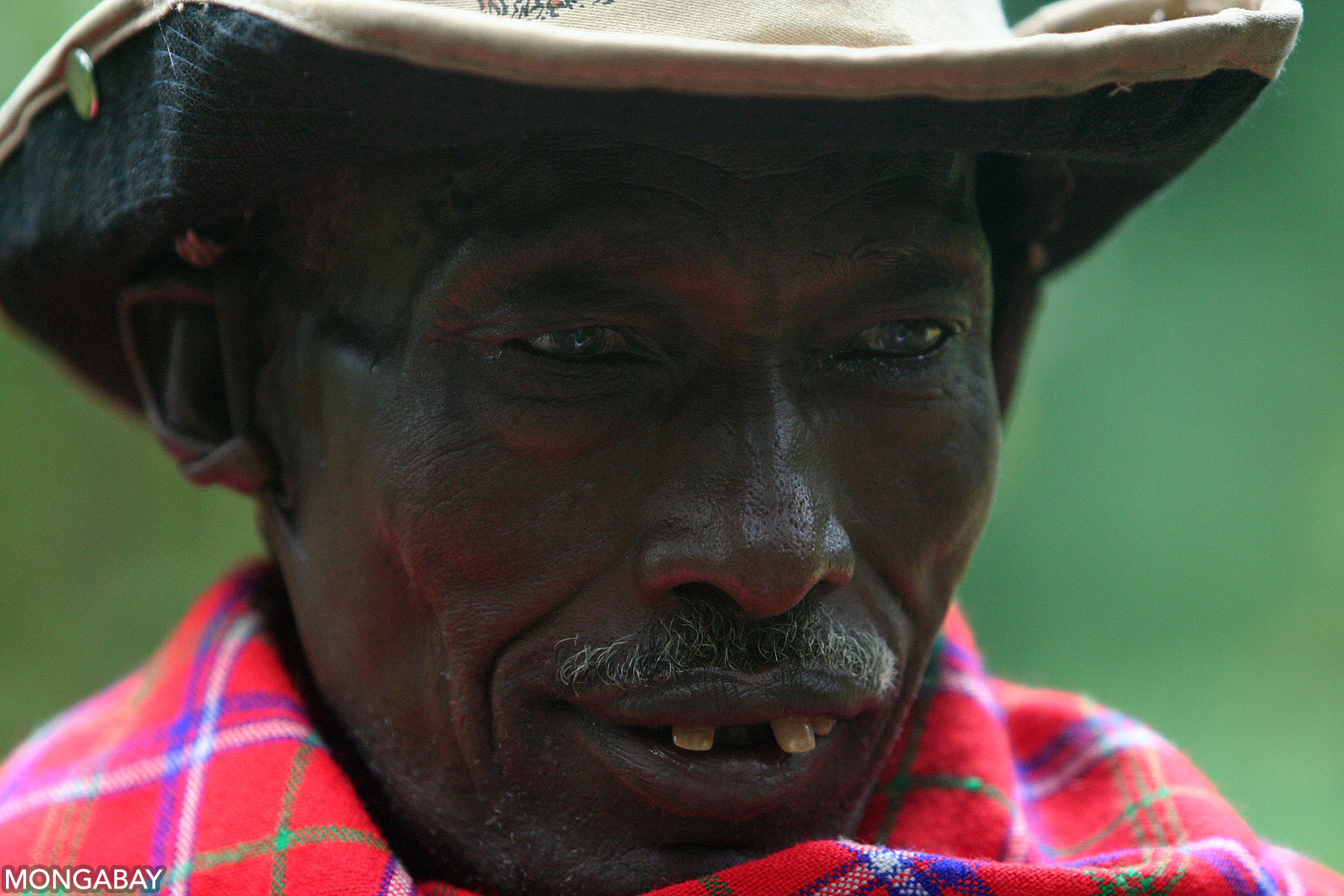

Human-wildlife conflict is not unique to Africa. It occurs nearly everywhere humans live in close proximity to wildlife. It may manifest as snow leopards killing sheep in Mongolia, tigers mauling illegal loggers encroaching on protected forests in Sumatra, jaguars eating cattle in the Brazilian Pantanal, or wolves taking down livestock in Wyoming. In almost every case, however, it we humans who are trespassing on their territories.
Categories
A visit to the rainforest goes awry
Suriname is a country few people have heard of, let alone visited. Located in the northeast corner of South America, Suriname is almost completely covered in rainforest. It has the distinction of having the highest forest cover — 95 percent — of any country. It is also one of a handful of countries where the official language is Dutch (Suriname was a Dutch colony until 1975).
My reason for visiting Suriname was to attend a science conference. But beyond that, a friend of mine works with the Trio, an Amerindian group that lives in the remote Suriname-Brazil border area, to develop programs to protect their forest home from illegal gold miners and encroachment, improve village health, and strengthen cultural ties between indigenous youths and elders at a time when such cultures are disappearing even faster than the rainforests. After the conference I would visit Kwamalasamutu, a village that serves as the hub for the Trio in Suriname.
[close-parallax-content][parallax-img imagepath=’https://imgs.mongabay.com/wp-content/uploads/sites/20/2018/12/10124954/suriname_2614_landscape.jpg’ alt=’Lowland rainforest a few hours from Kwamala.’ img_caption=’Lowland rainforest a few hours from Kwamala.’ title_color=’#FFF’][open-parallax-content]
Kwamalasamutu is very isolated. It is only accessible by plane or a week-plus journey upriver by boat. I opted for the plane.
After nearly a week of attending meetings in overly air-conditioned conference rooms, I was excited about getting into the field. The morning I was due to depart, however, I got a cryptic, but ominous message: the airplane couldn’t go to the interior due to flooding.
I probably should have taken that as a sign. Not that I’m superstitious, but there had been a number of bad omens up to that moment in Suriname: the four-hour passport control line in Trinidad that nearly caused me to miss my flight, the can of paint that exploded all over my bag and leaked inside, and the mysterious, yet savage mosquito attacks in my hotel room.
I didn’t think much of it at the time. While the weather was pretty good in Paramaribo, the capital, it was certainly possible that there was heavy rain deep in the forest. The next two mornings it was the same: bad weather and flooding would prevent us from flying.
The following day, I got seemingly good news: the weather had cleared enough that we could fly. The two-day delay had eaten into the several days I had allocated for this leg of the trip, which was the last before I went back to the U.S. At this point I would only have five days in Kwamalasamutu. That seemed like enough time to visit the project site and spend some time in the forest.
The flight to Kwamalasamutu confirmed that Suriname is indeed mostly forest. Outside the coastal zone around Paramaribo the only signs of humans were occasional villages along rivers and some gold mining areas. I could also see that there was some flooding; huts in several villages were virtual islands.

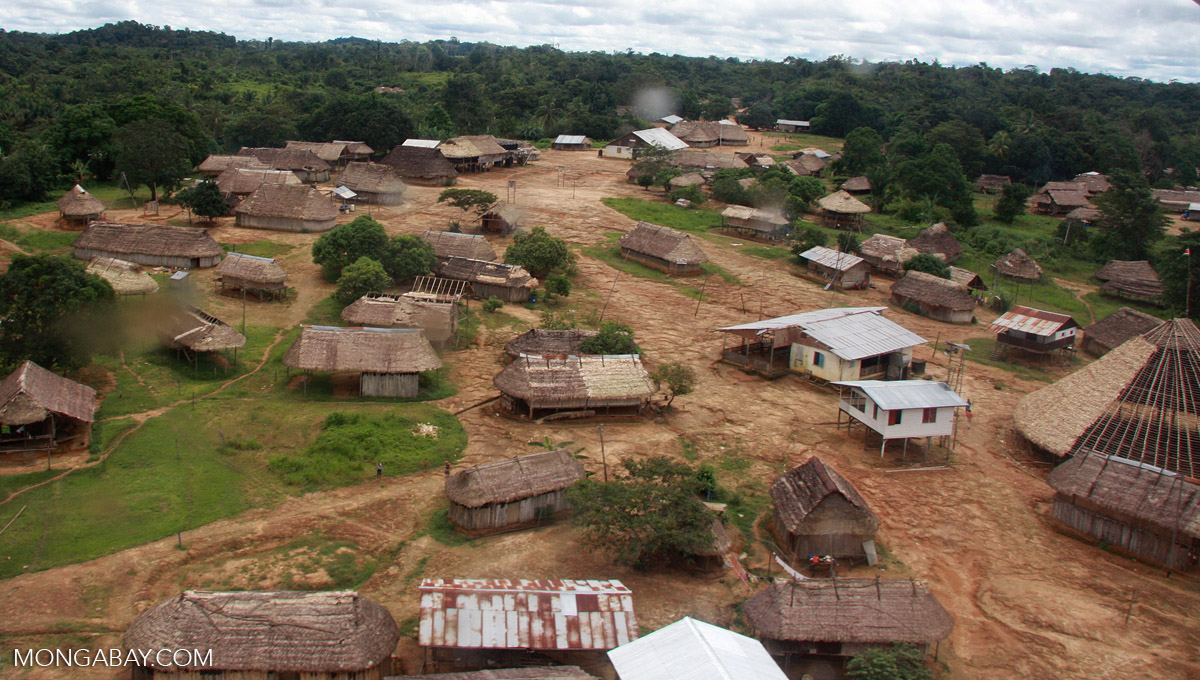
Kwamalasamutu is a substantial settlement for such a remote area. Up to 1,400 people live there, although there are rarely more than 400 residents at any given time due to the transient nature of its tribal inhabitants, who spend much of their time in the forest or other settlements.
Much of the Amazon rainforest remains occupied by tribal groups. While few of these live as conjured in the imagination, the state of the forests in their territories is a testament to their approach to managing the land. But like the Amazon itself, these groups face new pressures from the outside world. For the indigenous communities, the lure of urban culture is strong: cities seem to offer the promise of affluence and the conveniences of an easy life. But in leaving their forest homes, indigenous peoples are usually met with a stark reality: the skills that serve them so well in the forest don’t translate well to an urban setting. The odds are stacked against them; they arrive near the bottom of the social ladder, often not proficient in the language and customs of city dwellers. The lucky ones may find work in factories or as day laborers and security guards, but many eventually return to the countryside. Some reintegrate into their villages, others return in a completely different capacity than when they departed. They may join the ranks of miners and loggers who trespass on indigenous lands, ferreting out deals that pit members of the same tribe against each other in order to exploit the resources they steward. As tribes are fragmented, and forests fall, indigenous culture — and the profound knowledge contained within — is lost. The world is left a poorer place, culturally and biologically.
But there is new hope, embodied by efforts to enable tribes to become more self-reliant through the use of state-of-the-art technology that builds on and leverages their traditional knowledge. These tools can help them better defend their lands and offer the potential for the next generation of Surui, Trio or Ikpeng to have a future of their determination rather than one dictated to them by a society that values the resources locked in their territories over their forest knowledge and rich cultural history. Through such technology, tribes may be able to avoid a fate in which they become destroyers, rather than protectors, of the basis of their culture: their forest home.
My friend, Mark Plotkin, is at the forefront of this effort. His organization, the Amazon Conservation Team (ACT), a Virginia-based group with field offices in Brazil, Suriname and Colombia, has pioneered geographic information system (GIS) training for indigenous groups in the Amazon to enable them to map their land, not only as a means to demarcate it and win title, but to catalog their cultural links to the land. In building these “cultural maps,” tribes construct maps of their territory that go beyond the topography of the terrain, capturing the underlying richness of generations of human experience, including their interaction with the land and other tribes, and the distribution of plants and animals of nutritional, medicinal and spiritual significance. In other words, in as much as indigenous culture is a product of the land, the maps capture the essence of these tribes.
But creating a cultural map is no easy task. It can take years of work by the tribe, laying out what the map will contain, determining which communities will participate, and coordinating who in the community will do the actual footwork. Other considerations also come into play, including harvesting cycles and seasons (mapping can’t interfere with the ongoing the activities that sustain the tribe) and the treatment of intellectual property contained in the maps, since these can be used for nefarious purposes in the wrong hands, including exploitation of timber, game and medicinal plants.
[close-parallax-content][parallax-img imagepath=’https://imgs.mongabay.com/wp-content/uploads/sites/20/2018/12/09234713/suriname_2200_1998PX.jpg’ alt=’Trio indigenous guard’ img_caption=’Trio indigenous guard’ title_color=’#FFF’][open-parallax-content]
The training itself can also be complex. Indigenous mappers must learn the ins and outs of handheld GPS units, GIS systems, computers, and internet tools like Google Earth before they can construct maps and monitor their territories for threats and encroachment. But the payoff can be well worth the effort: 20 groups in the Brazilian Amazon have created culture and land use maps of their territories. The maps include 7,500 indigenous names, 120 villages and thousands of areas of cultural and historical significance. In Suriname, the maps are being used to help indigenous groups get government recognition of, and eventually title to, their lands. Some of the indigenous mappers have gone on to become certified as park guards, enabling them to earn an income while working to safeguard their lands.
Plotkin was unable to join me on this trip, but Melvin and Rachelle from ACT-Suriname accompanied me. Over the next few days, I saw ACT’s mapping and indigenous park guard work in action. I also witnessed ACT’s Shamans and Apprentices program, named after Plotkin’s best-selling book about his early years with the tribe. The program passes the shaman’s mastery of plants to the next generation.
Tropical rainforests house hundreds of thousands of species of plants, many of which hold promise for their compounds that can be used to ward off pests and fight human disease. No one understands the secrets of these plants better than indigenous shamans — medicine men and women — who have developed boundless knowledge of this library of flora for curing everything from foot rot to diabetes. However, like the Amazon rainforest itself, this is rapidly changing. As forests fall to loggers, miners and farmers, and the allure of Western culture attracts younger generations to cities, extensive knowledge of the forest ecosystem and the secrets of lifesaving medicinal plants are forgotten. The combined loss of this knowledge and these forests irreplaceably impoverishes the world of cultural and biological diversity.
ACT is working to avoid this fate by partnering with indigenous people to conserve biodiversity, health and culture in South American rainforests. Plotkin, a renowned ethnobotanist and accomplished author (Tales of a Shaman’s Apprentice, Medicine Quest) who was named one of Time magazine’s environmental “Heroes for the Planet,” has lived and worked with shamans in Latin America since the early 1980s. Through his experiences, Plotkin has concluded that conservation and the well-being of indigenous people are intrinsically linked — in forests inhabited by indigenous populations, you can’t have one without the other. Plotkin believes that existing conservation initiatives would be better served by having more integration between indigenous populations and other forest preservation efforts.
ACT is working to build stronger cultural ties between tribal elders and children. Under the “Shamans and Apprentices” program, elder shamans pass on their expertise of medicinal plants and healing rituals to apprentices, children who are otherwise increasingly distant from their culture.
Shamanism is a product of accumulated knowledge of past generations as well as deep ties, spiritual and physical, to the natural environment. But in a world where forests are being rapidly destroyed and profound cultural transformation is occurring among younger generations in traditional societies, the healing knowledge of shamans is disappearing. Among the Trio, the trajectory was accelerated by the missionaries who initially demonized shamanic practices, ostracizing healers from their communities and leaving an entire generation without the traditional apprentice/mentor relationship that is the basis for passing on knowledge from tribal elders to youths.
ACT has established a system of traditional health clinics to improve health care and promote medicinal plant knowledge among younger members of the tribe by bridging the gap between youths and healers.
But while seeing ACT’s work was inspiring, the weather issue that delayed my arrival was becoming a worry.
On my second day I noticed that no plane had arrived. I assumed that was normal; after all, how much air traffic does a remote outpost in the Amazon receive?
The next day was the same, no plane. But this time there was gear on the airstrip that looked like it was awaiting shipment. Then I heard Melvin complain that air traffic control in Paramaribo thought it was flooding here and was blocking service.
It had rained in the middle of the night, a torrential downpour, but the ground was dry and the skies clear. I walked around the airstrip. The ground was hard and I didn’t find any swampy areas.
This could be a problem. If air controllers were making sweeping assumptions about the conditions on the ground here, we could potentially be stuck here for quite a while.
Apparently air traffic control was on edge after a plane crash a few weeks earlier had killed 17 passengers. They weren’t taking any risks. Because the weather maps showed rain in the region, the assumption was it was too dangerous to fly.
Normally I wouldn’t be too concerned about the prospect of being trapped in the forest a few extra days, but this time was a little more inconvenient since it was the end of my trip and the plane ticket from Suriname would be rather expensive to change. I also had upcoming meetings in San Francisco I hoped not to miss. But I still had a few more days; maybe Paramaribo would relax a bit or the “weather” would let up.
The next few days I saw other aspects of ACT’s work like its indigenous park guards program. I also spent time with Amasina, a Trio shaman, try to learn more about how he diagnosed and treated disease. At the moment he was treating a very sick Dutch woman, for whom doctors said they had done everything they could. She had come here as a last resort.
She described the way he looked into her eyes and touched her in a comforting and knowing way. Amasina had no prior knowledge of her conditions, yet he immediately identified her illness as originating in her liver, which was accurate. She was surprised when Amasina told her he had seen much worse and that she would get better.

Ethnobotanists, people who study the relationship between plants and people, have long been aware that rainforest dwellers have an astounding knowledge of medicinal plants.
For thousands of years, indigenous groups have extensively used rainforest plants for their health needs: the peoples of Southeast Asian forests used 6,500 species, while Northwest Amazonian forest dwellers used 1,300 species for medicinal purposes. Today, pharmacologists and ethnobotanists work with native healers and shamans in identifying prospects for development of new drugs. The yield from these efforts can be quite good — a study in Samoa found that 86 percent of the plants used by local healers yielded biological activity in humans — and the potential from such collaboration is huge, with approximately one half of the anti-cancer drugs developed since the 1960s derived from plants.
Perhaps more staggering than their boundless knowledge of medicinal plants is how shamans and medicine men could have acquired such knowledge. There are over 100,000 plant species in tropical rainforests around the globe, yet how did indigenous peoples know what plants to use and combine, especially when so many are either poisonous or have no effect when ingested? Many treatments combine a wide variety of completely unrelated innocuous plant ingredients to produce a dramatic effect. Some, like the curare of the Amazon, are orally inactive, but when administered to muscle tissue are lethal.
No one knows how this knowledge was derived. Most say trial and error. Native forest dwellers say the knowledge was bestowed upon them by the spirits of the rainforest. Whatever the mechanism, evidence from Amazonian natives suggests that indigenous knowledge of medicinal plants can develop over a relatively short period of time.
Ethnobotanists studying medicinal plant use by recently contacted tribes like the Waorani of Ecuador and the Yanomani of Brazil and Venezuela reported a relatively limited and highly selective use of medicinal plants. They had plants for treating fungal infections, insect and snake bites, dental ailments, parasites, pains and traumatic injuries. Their repertoire did not include plants to treat any Western diseases. In contrast, indigenous groups with a history of continuing contact with the outside world have hundreds of medicinal plants used for a wide range of conditions. It seems that after contact, in response to the introduction of Western diseases, these tribes accelerated their experimentation with medicinal plants. This notion contradicts the idea that indigenous knowledge of medicinal plants was accumulated slowly, over hundreds of years.
The knowledge and treatments of shamans is the product of their own scientific method, accumulated from a progressive cycle of trial, experiment and observation repeated over countless generations. It may not be published in Science or Nature, but in many ways is fundamentally based on the very same empirical and pragmatic principles as Western medical science.
Shamanism is a product of accumulated knowledge of past generations as well as deep ties—spiritual and physical—to the natural environment. But in a world where forests are being rapidly destroyed and profound cultural transformation is occurring among younger generations in traditional societies, the healing knowledge of shaman is disappearing. Among the Trio, the trajectory was accelerated by the missionaries who initially demonized shamanic practices, ostracizing healers from their communities and leaving an entire generation without the traditional apprentice/mentor relationship that is the basis for passing on knowledge from tribal elders to youths.
As the days passed I grew more concerned about my impending international departure. It was looking bleak. Each night would be clear and I would go to bed thinking tomorrow the plane would come. But each night I was awoken by the sound of distant, but approaching rain. The din would grow louder into a thunder and then crescendo as a roar — immense buckets of water pouring down on the thatch roof. I’d hear the water rushing; the bare ground around the hut becoming a river. Eventually I would fall asleep. By morning, when the drone of the rambling announcements made over a distant loudspeaker by the village chief would begin, the only sign of the deluge would be a higher waterline in the swampy area behind the hut. The grass airstrip would again be dry. Yet again, no airplane.

The same events unfolded each day and it was clear we wouldn’t get back to Paramaribo in time for me to catch my flight home. ACT had a satellite phone, so I was able to alert the airline that I would need to postpone my flight home. That process was like something out of a slapstick comedy: the phone only picked up decent reception in the middle of the airstrip under the baking sun. The ticketing agent would put me on hold before giving the final confirmation. Each time I was put on hold I would lose the connection. It was infuriating. Eventually I figured out another approach: I called my mom at her travel agency and asked her to handle the arrangements.
We had only brought enough food for five days and were starting to run low on some of the rations. Because the water levels were high from upstream rain, some of the manioc fields were flooded and fish were hard to catch, making food scarcer than usual in the community. But we still had a decent supply of hot dogs and rice.
At this point I still hadn’t had much of an opportunity to get into the forest. The uncertainty with the itinerary meant we had to stick around Kwamalasamutu in case a plane miraculously appeared. As it was, we were constantly scanning the skies in the hope salvation would come.
[close-parallax-content][parallax-img imagepath=’https://imgs.mongabay.com/wp-content/uploads/sites/20/2018/12/09234224/suriname_2288_2100px.jpg’ alt=’Sipaliwini River’ img_caption=’Sipaliwini River’ title_color=’#FFF’][open-parallax-content]
One of the reasons I had come to this part of Suriname, beyond wanting to see ACT’s work, was to try to find the dyeing dart frog. This wasn’t just any old frog, it has electric blue and yellow patterns. The colors advertise its toxicity to predators. Related species have been used by indigenous populations to poison the tips of darts and arrows. The toxin paralyzes the respiratory system. Because it isn’t orally active, it doesn’t poison the flesh, which can thus be eaten.
The indigenous park guards knew where to find this frog, but it was four hours by dugout canoe. Since the airplane status hadn’t changed in a week, I decided to chance it and go frog-seeking the following day. At least barring a rainless night, of course.
After yet another night of rain, starting about 1 a.m., I met Jonathan and Juan, Trio men employed by ACT, by the river. I carried my camera, each had a shotgun with a shell, and there were gill nets in the boat. This would be a joint patrol and hunting trip.
As we went upriver they laid nets along the vegetation. The river was muddy and swollen from the unusual amount of rain. Some of the trees were submerged up to their lower branches.
After a few hours in the dugout we reached our destination, a swampy area. We put on boots and set out into the forest. Not speaking much Dutch or Trio, communication was mostly limited to gesturing and the few words we knew in each other’s languages. Jonathan was taking me to look for frogs. Juan was going hunting. After a few minutes we encountered the first dyeing poison dart frog. As expected, it was beautiful. There were a lot of frogs in the forest. Most were in the leaf litter, but a couple had a tadpole on their back and hopped directly up the vertical tree trunk toward the canopy. Once they got there they would deposit the tadpole into a pool created by the upturned leaves of a bromeliad. The mother would return regularly, repeating the arduous trip up the tree drunk to deposit an infertile egg as food.

My observation of one of the mama frogs making this journey was interrupted by a sharp whistle, then the boom of a shotgun. Jonathan shouted something, then started running. I followed him, but struggled to keep pace with my camera and lenses in hand, height, and lack of forest agility compared to the locals. Vines, spiny plants and small hanging nests didn’t help.
After about 10 minutes on the run we came across Juan, who was staring up into the canopy. There were droplets of blood on the plants around him.
After a moment I spotted what he was watching: a red howler monkey. Juan had used his one shell to shoot the primate, which was now moving around agitated in the canopy. In the shadows above it I could make out some other howlers, which were also watching.
As the howler lost blood, it moved less and dropped lower down the canopy. After about 20 minutes it climbed onto a liana that nearly reached the ground. Juan shook the vine violently and the monkey tumbled to the ground. It tried to run away but Jonathan grabbed it by the tail. He proceeded to bludgeon it with the blunt end of the machete. All the while a bigger monkey watched. It descended the canopy to observe the fate of its companion. Its expression forced me to look away.

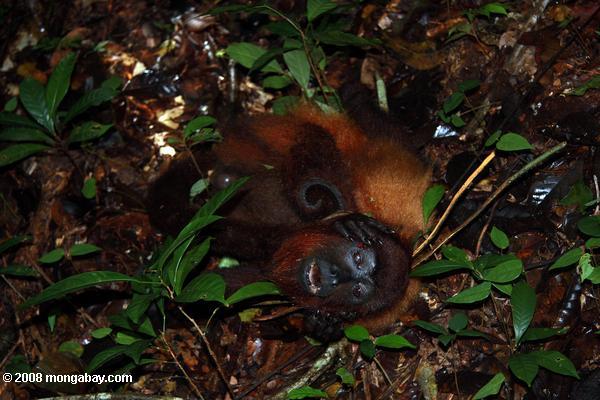
Jonathan and Juan made quick work of the monkey, converting it into what could be compared to a backpack. As we made our way to the canoe, the dead monkey stared at me, its head bobbing up and down.
As we moved from the cathedral-like primary rainforest with its towering trees and relatively sparse understory to the swamp forest, the vegetation grew thicker and more tangled, necessitating the use of machetes. Hacking through the underbrush is not easy work. It requires strength, stamina, patience, and quick reflexes to dodge the critters that may be disturbed by the slashing: wasps, centipedes, spiders, biting ants, and snakes.
I was walking behind Jonathan and Juan, careful to avoid the swinging blades. But then in an instant a piece of wood splintered from a machete hack shot into my eye. I cringed as I felt my contact lens move high up my eyeball. While the lens had protected my eye against the impact, it had been dislodged to a place it didn’t belong. My day had suddenly gotten a whole lot worse.
Jonathan and Juan continued chopping through the understory and I followed them. There was nothing I could do here about my eye. We found the canoe and paddled out of the swamp and into the river.
On the way back, Jonathan was fixated on “sweet meat,” which was apparently a reference to iguana, the large vegetarian lizard that often hangs out in trees along rivers. He had one shotgun shell remaining.
Jonathan stood in the front of the boat on iguana patrol. He spotted a few but each time they dove into the river before he could take aim. Meanwhile the dead monkey continued to stare at me through its vacant eyes as I used my macro lens to try to take self-portraits of my eye in an effort to assess the damage. It was very red and there was no sign of the contact — which was a hard lens. I was hoping to at least see an edge so I could try to remove it once I got back to Kwamalasamutu.
We would stop at the sites where the gill nets were laid. The pickings were slim. The nets only contained a few fish, but Jonathan and Juan would toss each one no matter the size into the bottom of the boat. The fish would flop about. Some made sounds: the catfish would chirp or make grinding noises.
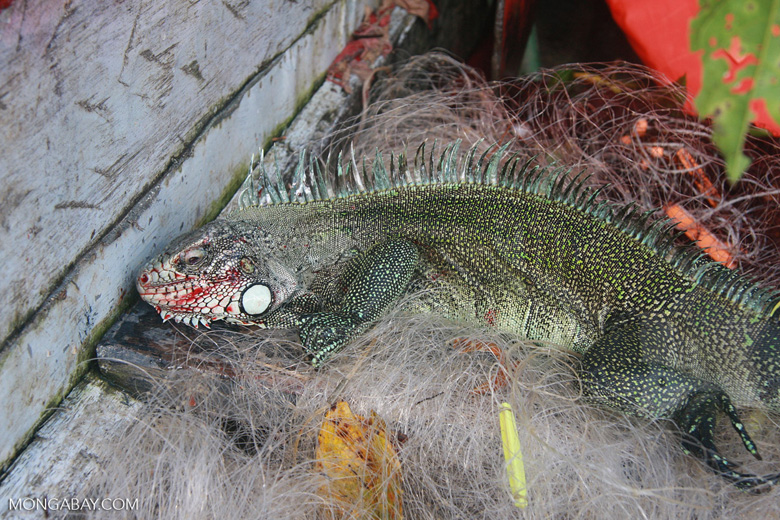

Jonathan spotted a big iguana in the top of a tree. This time he was careful and we took a stealth approach, concealing ourselves in some vegetation until he was within range. Jonathan stood up, took aim, and fired. It was a direct hit, and the iguana fell onto a branch just inches above the ranging current. Jonathan collected his prize, which was added to the collection of fish and my dead monkey friend, who was now attracting quite a number of rather large flies.
We came to another fishing net. As Jonathan and Juan untangled it, a plane flew over. My heart raced. Could this be my rescue? How far were we from Kwamalasamutu, I asked Jonathan. But the message didn’t get across. There was nothing I could do at that point. Hopefully the plane would wait for me.
Then Jonathan noticed my eye. He could see something was clearly wrong. I explained and managed to convey that something — I didn’t bother trying to explain the concept of a contact lens — had gone into my eye. He looked concerned, then started to move his finger, still stained with monkey blood, toward my eye. I quickly said we could wait until we got back to Kwamalasamutu. He seemed to understand. The last thing I needed at this point was an eye infection while trapped in a remote Amazon forest.
About two hours later we reached Kwamalasamutu. There was no plane. It never landed. Hopes crushed, I went to go find my travel mirror to see if I could locate the contact in my eye.
I was unable to see it but I could certainly feel it. My eye was looking pretty nasty but I’ll spare you the details. The ACT people took a look but came up empty as well. Even Amasina checked, but he found nothing.
That night I lay awake suffering in my hammock. It was especially hot. Sweat dripped down my brow. Would it rain again tonight? I waited for the dreaded sound. One a.m. came, but still no rain. Maybe this was my break.
I dozed off only to be awakened by a thunderous downpour, more vicious than any we’d experienced yet. It was accompanied by deafening thunder that shook the ground. We weren’t going to be flying out that day.

In the morning my eye was throbbing and looking disgusting. I exhausted every idea: opening my eye underwater, flooding my socket with artificial tears, rolling my eyeball and flipping my eyelid inside out — nothing worked. No one could see the lens, but I knew it was still in there.
Melvin and I spent the day trying to convince air traffic control via radio that the airstrip was fine for planes. We weren’t successful.
We used up the last of the hot dogs, sugar and tea. We only had rice left.
Another night came and went. Rain again.
The next day our hopes were raised. A rumor spread that a plane was coming. Sure enough in the afternoon, a plane circled overhead. We were relieved. But it didn’t land. More waiting.
Having failed in the appeal to the authorities in Paramaribo, I sought more drastic measures. I went to Amasina and asked about the possibility of a no-rain dance. To my disappointment, he said it was going to rain again that night.
But then Amasina told me something really interesting. He said rain patterns had shifted dramatically since Mark Plotkin had first arrived in Kwamalasamutu. Floods were worse now, while the dry season was more severe. He didn’t know what caused the change, although he didn’t blame Mark for the development.
That night, as Amasina predicted, it did rain — the same deluge as the night before.

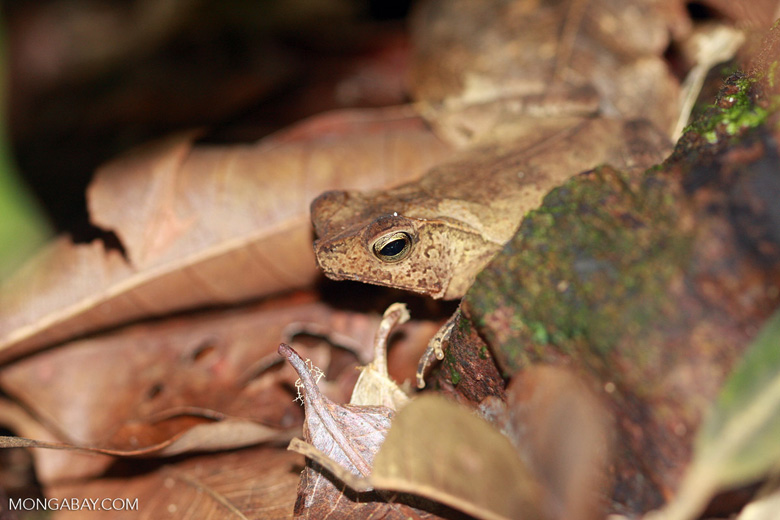
I awoke to the usual banter at 5 a.m. from the loudspeaker. Feeling glum, I rolled out of my hammock. My eye was especially gritty and gross that morning.
I went out to look at the airstrip; no change, it was still there. I went behind the hut. The water level in the swampy area had risen considerably overnight. The outhouse was now partially underwater. I went into the kitchen. The rice supply was looking pretty meager. Not a great start to the day.
Melvin then shouted “Good Morning.” I turned around. He was beaming. The loudspeaker announcement this morning said a plane would be coming to Kwamalasamutu.
Impossible. I didn’t believe it. I wasn’t going to let myself get set up for disappointment yet again.
But this time was different. People in the community were bustling and Melvin himself was packing up his things. Maybe this really was going to happen today.
In the event we were going to make it back to Paramaribo, I was going to need medical attention, preferably an ophthalmologist. So we called ACT headquarters. They would make an appointment for me.
We waited anxiously. Hours ticked by. Then we heard a wonderful sound: the buzz of an airplane. It circled one, twice, and then it landed! Rejoice!
A couple of passengers disembarked. The pilot spoke with Melvin. Their voices grew louder and more urgent, accompanied by gesturing. The pilot stormed over to the plane and got inside.
Melvin came over to explain the situation. The pilot said he only came to drop off passengers; he didn’t have enough fuel to carry people back to Paramaribo. Maybe there was another plane on the way.
The news wasn’t welcome. Melvin went back to negotiate with the pilot and was joined by community members. The conversation stretched on for 20 minutes, and then 40. Was this a stalling tactic to see if another plane was going to arrive?
Melvin walked over to me. A decision had been made: all five of us were going to squeeze into the plane.
That was an abrupt change. I wasn’t sure what to think. After all, if the pilot didn’t have enough fuel for any passengers, why would he suddenly be able to carry five plus gear? I wasn’t going to question the decision, however. I didn’t have all the information. I needed to get back to Paramaribo to get my eye examined. I was sure the pilot knew what he was doing.
We climbed into the Cessna and rolled down the runway. The plane accelerated but wasn’t lifting off. We must have been overloaded. Ahead of us loomed a wall of rainforest. Were we going to make it?
As we neared the trees we finally lifted off, just clearing the canopy, before coming down low over the river. We were close enough to see the ripples. Slowly we built altitude over the river and then turned back over the forest. We were on our way.
The flight was nerve-racking. There were towering thunderheads and some rough patches. The fuel gauges were precariously low by the time we finally started to see the first signs of civilization. We seemed to be flying on fumes, but we made it to Paramaribo.

Upon arrival I received some unhappy news: there had been no luck in arranging a doctor’s appointment. It was Friday and most of the doctors had gone home after lunch. But I could try the emergency room.
That wasn’t exactly what I had in mind, but Paramaribo had to be better than Kwamalasamutu for getting eye treatment. As we headed toward the hospital, the phone rang. Melvin had found an optometrist who could treat me at his home office. So we went straight to his place.
There I was met by his wife, who said he would be home shortly. She could tell I had been through a lot, and offered me food, drink and the hand of one of her daughters.
After a couple of hours, the doctor finally came home. He led me down to his basement where he had an office. He had clearly been in the eye business for a long time — the room was full of all sots of instruments of torture that looked to date from the 1950s or 1960s. But reassuringly there was an eye chart and an examination chair.
I saw down and explained to him the problem. An immediate concern was that though he spoke perfect English and was an optometrist, he didn’t seem to know what a hard lens was. He asked me to get in the examination chair and looked into my eye.
“Nothing there,” he said. “Is it the other eye?”
My confidence not inspired, I told him he had the correct eye, but that the contact was very high.
“OK,” he said. He prodded some more. And finally, “I think I can see it way up there. Maybe.”
“I need to strap you in.”
He strapped down my wrists and braced my head with a clamp. He took a pliers-like device from a drawer.
I could tell this was going to be unpleasant so I turned my mind elsewhere. I thought about my time with Amasina, the moments in the forest, the monkey, and those beautiful frogs that had seduced me into this situation. Then it was over.
“There it is,” he said as the contact landed with a light “click” somewhere on the linoleum. He unrestrained me and I jumped up, giving him a big hug. I was overjoyed. He was bewildered by my reaction. I paid him, thanked his wife, and went on my way.
The next day I was feeling great. So good the 3 a.m. departure for the airport didn’t bother me. Nor did my missed flight out of Trinidad due to incompetence at passport control, nor the godforsaken but pricey airport hotel with a human-shape stain on the carpet and a bathroom floor flooded with black sludge. I had survived Suriname with vision in both my eyes. That was enough for me.
Categories
How Mongabay grew
As I described in the origin story post, Mongabay had a very modest beginning. I never had any intention of making a living, let alone a career, out of running the website.
After quitting my day job to pursue my passion at 25, I dedicated myself completely to building Mongabay and tracking tropical rainforest issues. It wasn’t easy: the revenue from advertising was pretty marginal those first few years, especially when factoring in the 100-plus hours a week I was putting into the effort, plus travel and equipment costs. But I loved what I was doing — when asked what I would do on a day off, I’d say “Exactly what I’m doing when I’m working.”
Once I started doing Mongabay full-time, I focused on creating more content for the site. One of the first things I did was write a section about rainforests for children, illustrated with the growing collection of photos I was taking. As part of my effort to reach as many people as possible, I found native speakers to translate the text into nearly 40 languages.
Less than a year after leaving my “real job,” I created the news section of Mongabay to address what I saw was a gap between mainstream media’s inattention to conservation issues and advocacy-oriented communications from NGOs. Most of the focus was on rainforests, but I did occasionally cover climate and energy, travel, and green design, especially biomimicry. My articles seemed to resonate with audiences; Mongabay’s traffic grew steadily.

The great thing about running Mongabay in those days was I could work from anywhere. And no one expected me to do daily reporting, so I go could go out to the field for extended periods of time to take photos, conduct research and interviews, and hang out with incredible conservationists and front-line environmental defenders.
When I wasn’t traveling, I maintained a pretty intense work schedule, albeit one that lacked the formality of my previous career at a Silicon Valley startup. I was glad to say goodbye to that world.
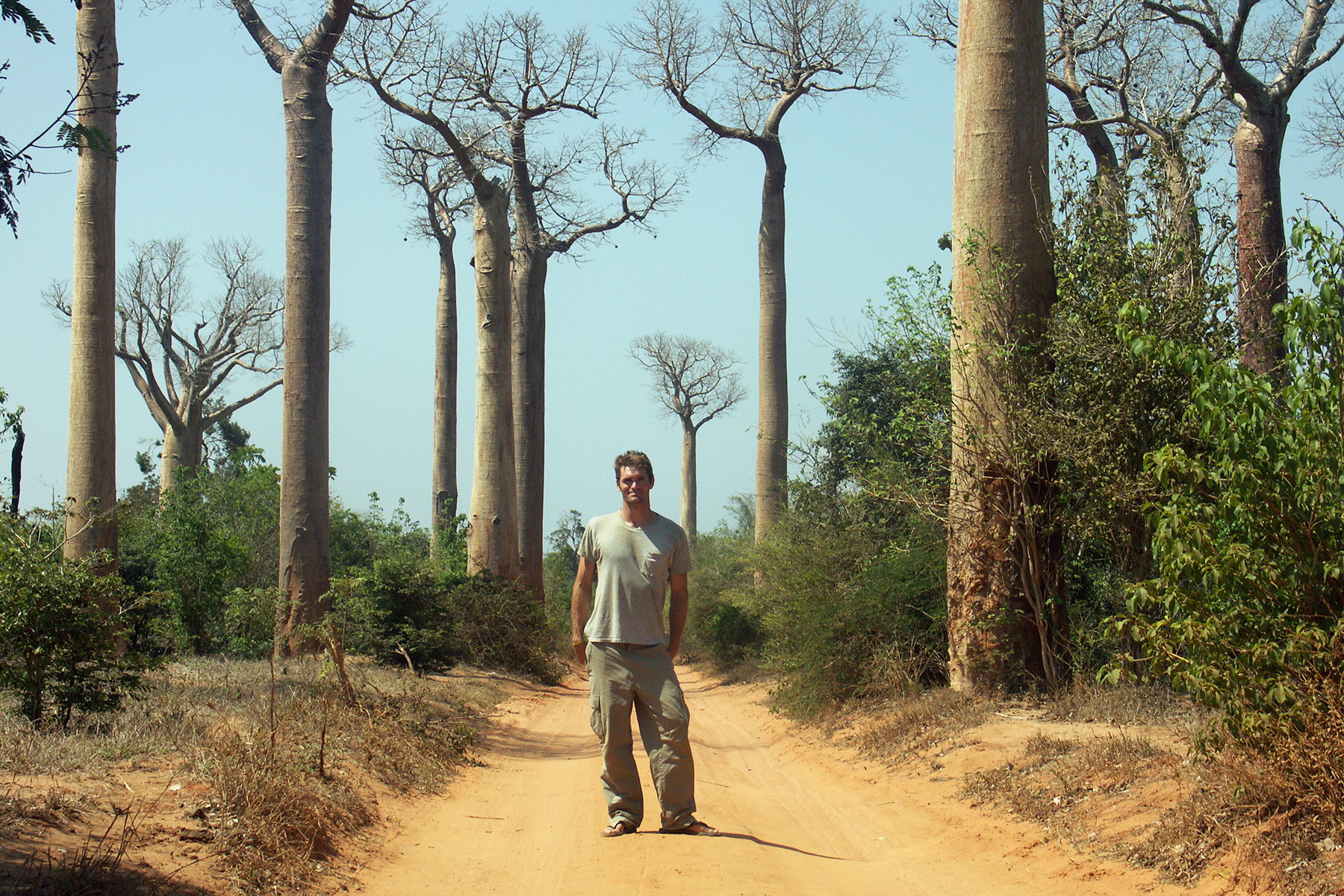
As Mongabay’s audience grew, so did its reputation. The surprising thing was that many people seemed to think Mongabay was a much bigger entity than a guy sitting in his apartment typing away on his computer in his pajamas. Amid the massive volume of email, I received requests for jobs, money, equipment and reporting partnerships on a regular basis.
But the reality was still that I was just a pajama-clad guy in his apartment. I lived simply and managed expenses carefully so I could keep this thing going.
Within a year of launching the news service, I was producing close to 1,000 stories a year by myself, but I started to get some help. My first outside writer was my sister. She was stuck in a dead-end job with a desire to work on sustainability issues; I told her that if she quit her job, I’d pay her a salary until she found something that was a better fit with her passion. She excelled in the role, publishing several stories that garnered a lot of attention on critical issues like cattle ranching in the Amazon, the collapse of Borneo’s dipterocarp cycle, and endangered wildlife. Mongabay wasn’t exactly flush with cash, but I was able to make it work.
In 2007, with my sister having moved on to greener pastures, I landed my first non-familial contributor: a graduate student named Jeremy Hance. Jeremy reached out to me with a heart-felt commentary on the extinction of the baiji, also known as the Yangtze river dolphin (Lipotes vexillifer). He felt the species’ demise did not get enough attention from Western journalists. He became Mongabay’s first intern.
Jeremy began writing occasional pieces for the site. By 2008, he was writing regularly enough that I felt guilty that he was doing this as a volunteer, so I invited him to attend the Association for Tropical Biology and Conservation conference in Suriname. He accepted my offer and brought along his wife, Tiffany Roufs. We met in person for the first time in a hotel lobby in Paramaribo, Suriname’s capital.


In Suriname, Jeremy asked if there might be a job for him after he finished grad school at the end of the year. By then, Mongabay had reached a point where I was able to pay myself a salary equivalent to my previous “real job” and the trajectory looked good, so I made him an offer. I had no idea that the financial crisis lurking just around the corner meant that 2008 was Mongabay’s peak revenue year.
A few months before Jeremy was to join Mongabay as its first employee, the marketing for green advertising collapsed along with the stock market and global financial system. But I didn’t want to renege on my commitment, especially given the difficult job market, so I stopped drawing a salary and instead lived off savings for about a year and a half.
Having Jeremy on board was a big boost to Mongabay. It greatly increased our ability to cover important conservation stories and also meant that the site didn’t go into a standstill when I was in the field. Jeremy was a strong and thoughtful writer who produced fine content. Several of his stories had major on-the-ground impacts, including his series about a plan to log Woodlark Island off Papua New Guinea, and a proposed coal plant in Sabah, Malaysia.

In the early years of Mongabay, I was commonly asked how I raised startup funding for Mongabay. A lot of people seemed to assume that I was either a trust fund baby or a dotcom millionaire, but the reality is less exotic — I invested time, rather than cash, into the project.
I started developing the content that would eventually become the basis of Mongabay well before I even knew the internet existed. First was a reference book about tropical freshwater fish. Then came a manuscript about rainforests, which directly led me to establish a website. Before I even wrote my first line of HTML code, I had already invested more than 6,000 hours into the project. By the time I put ads on the site in mid-2003, that number had grown to more than 15,000 hours. No matter how you value the time of a person in their teens and early twenties, that is a substantial investment. At $10 an hour, it’s $150,000; at $20, it’s $300,000. That time was my startup capital.
I had the benefit of having paid work during this time. In high school, I worked in retail. In college, I worked in consulting and finance. After graduating from college, I worked at a Silicon Valley tech startup. In each case, I devoted as much time as possible to my passion. For example, at the startup, that meant 45 to 50 hours a week in the office and 50 or more hours on nights and weekends focusing on Mongabay. The hard work paid off: I was able to build up the site to the extent that once I did decide to monetize the site via advertising, within six months the revenue coming in was equivalent to nearly half my “real job” salary. At that point I decided to leave the comfort of a steady income and pursue my passion full-time. I have never looked back since.
That said, while Mongabay’s traffic and influence continued to rise in the years after the financial crisis, revenue was flat. That made it difficult to pursue the many ideas I had that wouldn’t be viable with an advertising-based business model, like, for example, an Indonesian-language environmental news service.
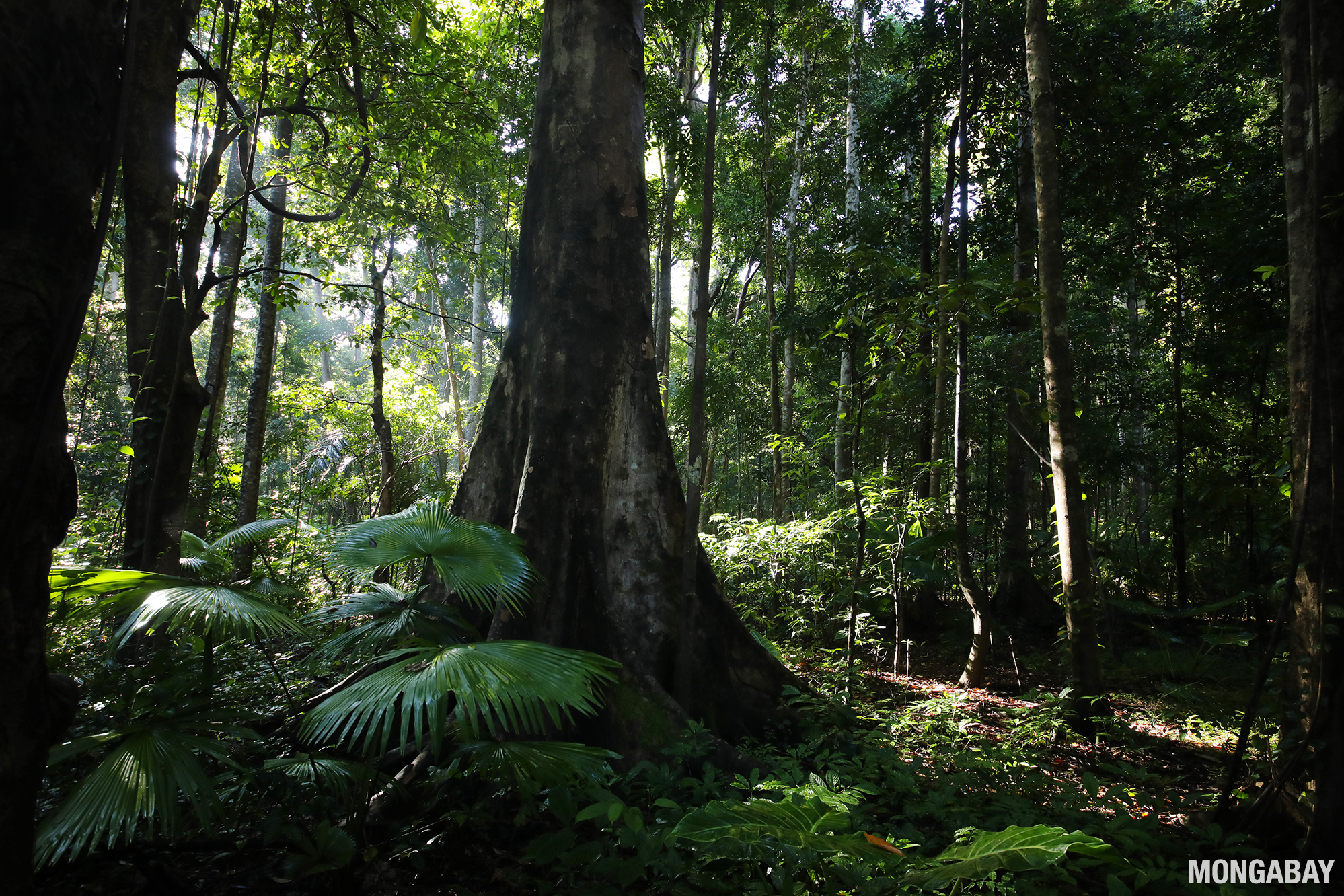
At the beginning of the 2010s, it appeared Indonesia was potentially nearing an inflection point in terms of its development strategy, where it could shift from a business-as-usual approach based on forest destruction to a model more like what Brazil had achieved a few years earlier, where deforestation was effectively disaggregated from national economic growth. In Indonesia, corruption around natural resources is a major issue, but one where journalism might be able to make a difference by increasing transparency and accountability. On that premise, in mid-2011 Mongabay began shopping the idea of establishing an Indonesian-language environmental news service run by Indonesians for Indonesians.
But first, I needed a business model. A lot of people already thought Mongabay was a nonprofit, so I decided to pursue that path, establishing the not-for-profit Mongbay.org Corporation. Once that was done, I submitted a proposal to the Ford Foundation in Indonesia and secured a two-year, $150,000 grant to establish Mongabay Indonesia. The day the grant was approved, I drafted three job descriptions, which I had translated into Indonesian, and then sent out to my network.
Resumes began pouring into my inbox. Within a week I had nearly 200, so I booked a trip to Indonesia and set up interviews with the top 40 candidates. After three long days of interviews with those applicants, I went to Ujung Kulong National Park, the last refuge for the Javan rhino (Rhinoceros sondaicus). During the day I went out with a rhino patrol unit, while at night I went through the notes from the interviews. By the time I was back in Jakarta a few days later, I had my final list and hired four Java-based staff in March 2012. Within a month, mongabay.co.id was live, and by June it was already one of the most popular environmental sites in Indonesia.

Mongabay Indonesia’s traffic grew rapidly: it received its millionth visitor in March 2014; hit the 5 million mark by September 2015, and 30 million in 2018. But even more surprising was how quickly the site was recognized by its media peers, civil society and authorities. By the end of 2012, Mongabay Indonesia journalists were regularly being invited to attend high-level press events and meetings with Indonesia’s largest newspapers, TV outlets, and magazines. By 2014, we were getting word that the president of Indonesia and his cabinet were reading articles on the site. More importantly, Mongabay Indonesia has had real impacts on the ground, exposing corruption and abuse, documenting successful conservation initiatives, and raising awareness on a massive scale.
We learned a lot from Mongabay Indonesia. In 2012, the social media market in Indonesia was more developed than in the United States or Europe, giving us important insight on marketing, outreach and user behavior on those platforms. Mongabay Indonesia was also an opportunity for experimentation. For example, Indonesia was where we first built a network of local correspondents. Until then, Mongabay’s content was only written by our two staff writers. That experience prompted us to hire editors and start engaging with journalists around the world.
With its proven track record, Mongabay Indonesia became the model for future bureaus, including Mongabay Latam for Spanish-speaking Latin America, which launched in 2016, and Mongabay India, which started in 2018. Its success helped us find resources for these other bureaus as well as special reporting projects — deep series on specific topics and geographies.

To gauge the effectiveness of various initiatives in Indonesia and beyond, we developed systems for tracking impact, including quantitative data like numbers of stories produced, readership, social media activity and republication by other outlets, as well as qualitative data like on-the-ground responses to our reporting. We developed our own tools and leveraged our reporting network to gather and evaluate this data, which we’d then use to modify our strategies and inform our supporters. We found that donors especially appreciated the information we were able to provide them on impact. This approach allowed us to build on our success and continue expanding the organization.
Today Mongabay has nearly 50 staff and some 350 correspondents in more than 50 countries. In 2018, we broke 100 million views across our website and videos for the first time. And our annual budget has increased 40-fold since 2012. In short, the organization has come a long way since I started it in my apartment after graduating college.


On a personal level, my role at Mongabay has also shifted dramatically as the organization has grown. I’ve had to mostly abandon writing to focus on running the organization and raising money. Gone are the days where I could be offline on expeditions for extended periods of time; I now have to be responsive to the wide range of issues that invariably arise with a sprawling operation. But my writing isn’t missed — Mongabay has an incredible team of writers and editors, and the quality of our content has increased as the organization has grown and matured. And the organization’s future looks bright!
Categories
Inspiration from frogs
Frogs are incredible creatures. Usually born in water, most live the first stages of their life essentially as a fish, before undergoing a radical metamorphosis that transforms them into an air-breathing animal that can find its way hundreds of feet up a tree or miles away from standing water. Some species are even capable of “flight,” — well, technically gliding. And of course there are the amazing exceptions. Young gastric brooding frogs emerge fully formed out of their mother’s belly. The Suriname toad births fully developed toads directly out of its back.
I have always loved frogs for their strangeness. Some of my earliest memories include visiting a local creek where I would search for toads among the rocks and green tree frogs in the overhanging vegetation. Sometimes I would catch and keep them for a few days, diligently feeding them insects, before releasing them where I found them.

So why are frogs important to this story? Put simply, frogs are the reason I embarked on my journey to becoming an environmental journalist.
As petty as it sounds, when I traveled with my family, my favorite places were often those with the most interesting frogs. Armed with a headlamp and clad in often uncomfortably hot attire for the tropics, I cherished night walks in the forest for the chance to spot frogs. All of them interested me: the stunning tree frogs with big, glowing eyes; the cryptic ones barely distinguishable from leaves; and even the dull, brown specimens that sat on the edges of rivers.
So my love affair with rainforests really began with frogs. But like rainforests, frogs are also in trouble, but in a much worse way.

Frogs around the world are dying at scales never before seen. More than one-third of the world’s more than 6,500 amphibian species are threatened, and at least 200 have gone extinct in the past 30 years — a rate perhaps 1 million times the biological norm. Salamanders, those slimy, lizard-like creatures, are even worse off.
As frogs die, we are losing more than a boy’s childhood companions and inspiration. Frogs, and amphibians more generally, have important ecological roles. When they disappear, nature is thrown out of whack. Algae blooms in creeks, making life difficult for fish, while populations of some insects explode. This matters to us humans far more than a boom in mosquitoes.
Their need to protect themselves from predators has turned some frogs into chemical factories, creating unique toxic compounds that have applications beyond being a deterrent to frog-eaters. Some of these toxins are derived from their prey, others are from origins unknown. Either way, frog-derived compounds are paying dividends for mankind in the form of medicines. For example, in the early 1990s, Abbott Labs began working with a frog toxin-derived compound for the treatment of pain. Abbott eventually created ABT-594, a non-toxic, non-addictive painkiller potentially effective for treating several types of pain. But the creation of ABT-594 almost didn’t happen. The area of Ecuadoran rainforest from which the frog was originally collected in 1974 was cleared shortly thereafter for banana plantations. Luckily, a second site still housed the frogs, and scientists were able to collect a sample of the poison, which would later serve as the template for the painkiller.

This near-miss with ABT-594 illustrates the importance of conserving biodiversity, especially in the tropics. Frog conservation is of particular concern given the recent worldwide decline in amphibian species.
The plight of frogs extends to other species as well. In fact, their aquatic nature makes them in a sense “canaries” in a coal mine. They are the first to feel the effects of climate change and chemicals in their habitat. But other species are following in the footprints. Already we have lost the Javan and Bali tigers in Indonesia, the passenger pigeon in America, the dodo of Mauritius, and the unfathomably large elephant birds of Madagascar. What’s next?
Related reporting
- Goodbye to the Baiji 14 December 2006
Obituary for the Baiji: Chinese river dolphin declared extinct - Just how bad is the biodiversity extinction crisis? 6 February 2007
A debate erupts in the halls of conservation science - World’s bluest lizard headed toward extinction? 7 March 2007
Anolis gorgonae, or the blue anole, is a species so elusive and rare, that scientists have been unable to give even an estimate of its population. - Biodiversity extinction crisis looms says renowned biologist 12 March 2007
An Interview with Dr. Peter Raven, director of the Missouri Botanical Garden - Global warming may cause biodiversity extinction 21 March 2007
The impact of global warming on biodiversity extinction - Climate change claims a snail 12 August 2007
The Aldabra banded snail (Rachistia aldabrae), a rare and poorly known species found only on Aldabra atoll in the Indian Ocean, has apparently gone extinct due to declining rainfall in its niche habitat. - Scientists scramble to save dying amphibians 28 April 2011
In forests, ponds, swamps, and other ecosystems around the world, amphibians are dying at rates never before observed. - A final farewell: the Western Black Rhino goes extinct 12 November 2011
The western black rhinoceros (Diceros bicornis longipes) roams the woodlands of Africa no more. - European blood-sucker falls victim to global warming 26 August 2007
Europe’s only known land leech may be on the brink of extinction due to shifts in climate - Study confirms what scientists have been saying for decades: the sixth mass extinction is real and caused by us 21 June 2015
Humans are wiping species off the plant at a rate at least 100 times faster than historical levels, providing further evidence that we’re in the midst of a sixth great extinction
Categories
Mongabay’s origin story
One of the few benefits of having a father who had to fly each week from San Francisco to meet clients in Hawaii and Alaska during my formative years was the airline miles — my father had a ton. So many, in fact, that our family didn’t have to spend a lot of money on airline tickets.
The other travel perks came from my mother, who specialized in selling high-end exotic travel back in the days when being a travel agent was still a viable occupation. She had the knowledge, the connections and, on occasion, the package deals to visit interesting places all around the world.

So we traveled all over. We went to some of the “normal” destinations like Disneyland, the Grand Canyon, Yosemite, and the California Sierra Nevadas. We went to other, more distant, but not uncommon destinations, like Hawaii, Mexico, the Caribbean, and Europe. But what set our travels apart were the far-off and “weird” destinations, at least for a family with two kids under the age of 15: places like Botswana, Ecuador, Venezuela, Australia and Zimbabwe. These travels would shape my life. I learned to make the best use of idle time and bad situations, love the outdoors, and appreciate all kinds of diversity — different cultures, landscapes, philosophical outlooks, and animals.
I was especially interested in animals, particularly reptiles and amphibians, as I explain here. My love for wildlife naturally led to a fascination with rainforests, which have the highest diversity of plant and animal species on the planet. My parents, probably to their initial dismay, encountered a boy who increasingly lobbied to go to less and less comfortable places: destinations where the spiders were bigger and hairier, the snakes more venomous, and the mosquitoes more abundant and malarial. Don’t get me wrong. I loved the plains animals in Africa, the snorkeling in Kauai, the swims in the icy mountain lakes in the Sierras, but tropical jungles were most dear to me.
Some of my fondest memories consist of traveling to places in Central and South America, peeking under leaves for insects and sleeping frogs, scouring tree trunks for hidden lizards and insects that looked like leaves, exploring creeks for fish and snakes, and walking trails with local guides, who pointed out medicinal plants and birds I otherwise would have missed.
But global trends, notably rampant deforestation across the globe, would eventually interrupt my obsession with nature and replace my happy memories with ones of profound heartbreak. The first time was in eastern Ecuador, along the Rio Napo, a river that begins as an icy creek in the high Andes, builds as a fast-moving stream through rainforest prowled only by indigenous peoples, and concludes as a meandering river before it joins Earth’s mightiest river, the Amazon. As a 12-year-old in 1990, I spent an enchanting week along the river, exploring the forest with native guides and beholding the glory of the Amazon rainforest for the first time: the teeming numbers of multicolored butterflies gathered on beaches, the cryptic caimans lying in wait for prey among swampy shallows, and raucous parrots flying overhead.
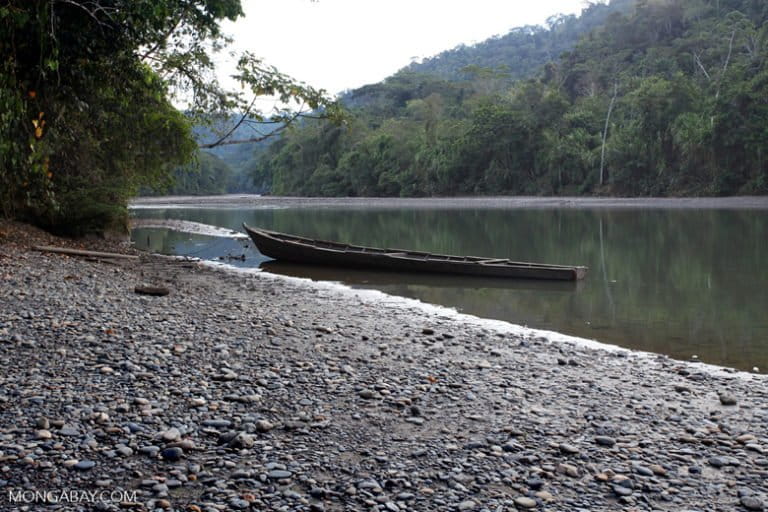
Several months after returning home, a headline in the San Francisco Chronicle caught my eye. A ruptured pipeline had leaked more than 1 million liters of oil, or about 264,000 gallons, into the Rio Napo. The spill was so bad that Brazil, downstream from the accident, declared a state of emergency. Reading the article, all I could think about were my indigenous playmates and the local guides who showed me the wonders of the forest. Where would they get fresh water? Where would they fish? Where would they bathe?
But the defining moment for me would come several years later after a magical experience halfway around the world. Lingering beside a small stream in the Malaysian rainforest of Sabah, on the island of Borneo, I sat watching the water move swiftly over worn, round stones. Vibrantly colored butterflies in shades of yellow, orange and green flirted with columns of light that penetrated the dense canopy. The croaking calls of hornbills challenged the melodic drone of cicadas. Though the forest is never silent or still, it brings a deep sense of calm.

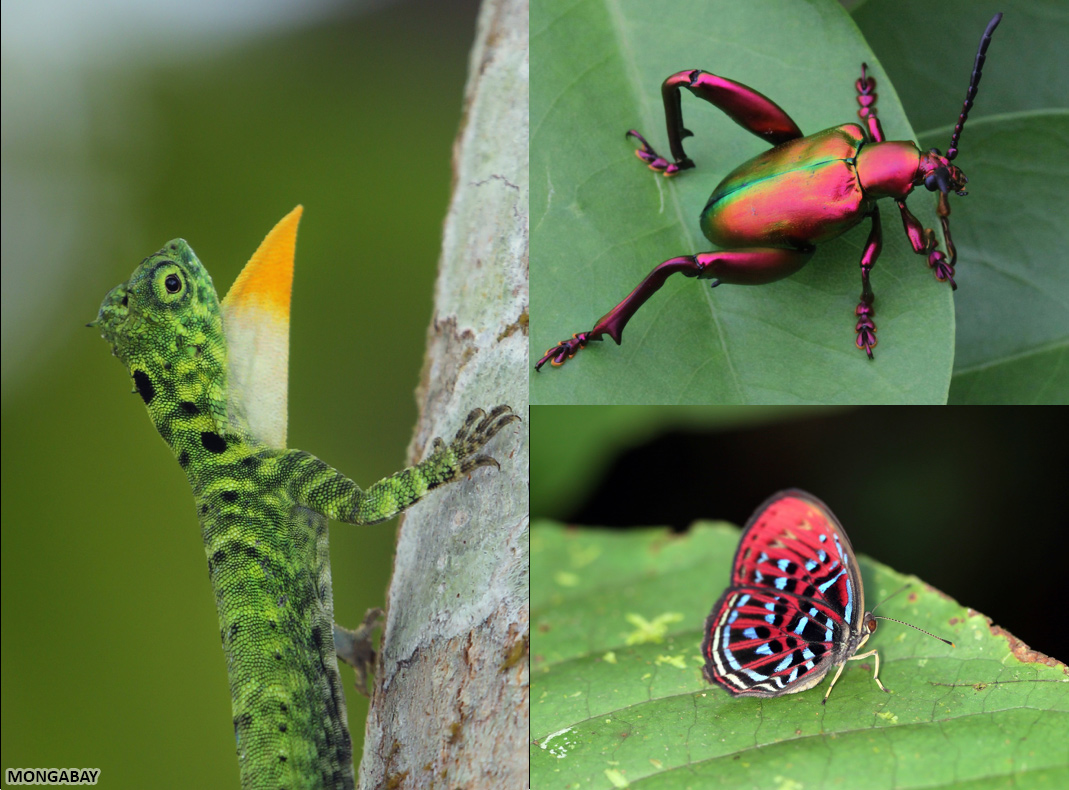
I sat with my feet in the cool water, picking over my clothes in search of leaf leeches, which seek a feeding opportunity in every crease of material. As I removed these brightly hued creatures, I watched a lone male orangutan silently make his way through the branches above the stream. The idyllic setting and the company of my red-bearded simian companion provided the perfect end to my half-day trek.
Eight weeks after leaving the tract of Malaysian rainforest that had filled me with happiness, I learned the forest was gone — logged for wood chips to supply a paper-pulp plant. This place of wonder and beauty was lost forever. The orangutan, the hornbills, the butterflies, and even the leeches would have to make do in their dramatically changed environment.
[close-parallax-content][parallax-img imagepath=’https://imgs.mongabay.com/wp-content/uploads/sites/20/2018/11/07124457/00-kalbar_1006a.jpg’ alt=’Lowland rainforest in Borneo’ img_caption=’Lowland rainforest in Borneo’ title_color=’#FFF’][open-parallax-content]
[close-parallax-content][parallax-img imagepath=’https://imgs.mongabay.com/wp-content/uploads/sites/20/2018/11/07124514/00-kali9753a.jpg’ alt=’Deforestation in Borneo’ img_caption=’Deforestation in Borneo’ title_color=’#FFF’][open-parallax-content]
I was at a loss for words when I would try to explain my sadness to my grade-school friends. Why, they asked, did I care about the destruction of a distant mosquito-ridden forest? After all, we need paper for books and timber for furniture. And those red hairy apes were funny-looking and lived in zoos anyway. I saw their lack of compassion as symptomatic of the broader public’s apathy toward these issues. It inspired me to try to do something to make people aware of, and care about, what was happening to these increasingly rare places.
Most people don’t have the great privilege of experiencing the magnificence of these places, so I wanted to find a way to show people that special places, with wildlife and people, do exist outside zoos and cartoons.
So I started writing. To some this may seem an unusual decision for a kid just wrapping up high school, but there was a precedent: early in high school I wrote a reference book on tropical freshwater aquarium fish. The subject was a bit arcane but at one time I was obsessed with tropical freshwater fish, the ones you commonly see in aquariums, like neon tetras, platies and angelfish. But also stranger ones like eels, upside-down catfish and elephant-nose fish. In preparation and during the course of writing the book, I devoured hundreds of books and magazines, read academic papers at the library, worked in a fish store, scoured the live-fish wholesalers in the seedier parts of town, and took thousands of pages of notes. I also kept more than a dozen fish tanks, much to my parents’ displeasure. I was especially interested in attempting to recreate natural habitats for fish: biotopes. As I learned more about fish, the questions only grew. I became more concerned about the trade. Was it sustainable? Could fish-keepers play a role in conservation? What was happening to the habitats of freshwater fish?

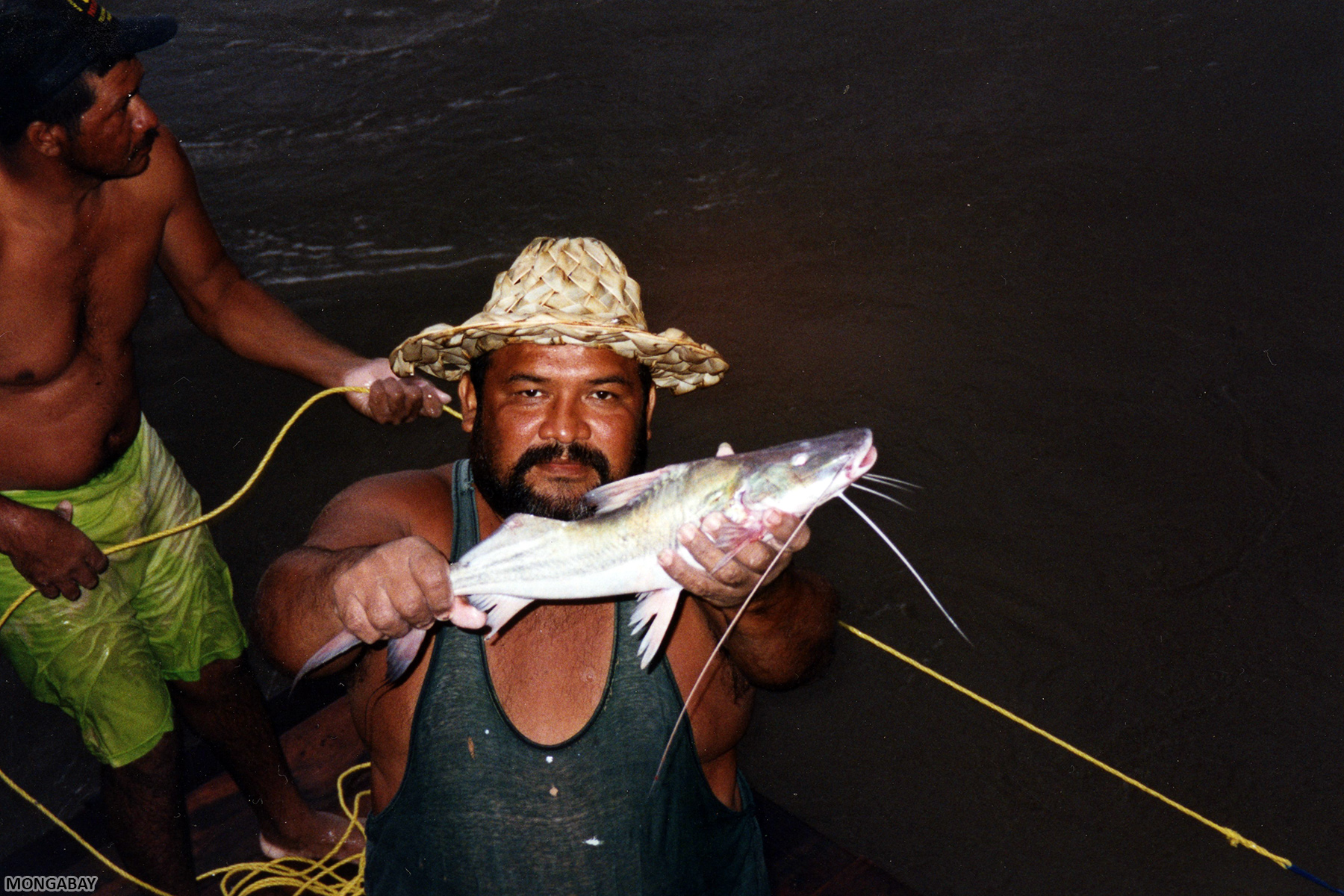
I knew a bit about what was happening to their habitats, thanks to my travels. During one of my trips I bought a throw net, which I would lug on some of my trips (something that would not be possible in a post-9/11 world, given the net’s weight of 40 pounds, or 18 kilograms). Everywhere I could I would use the net, catching and identifying fish — carefully, so they wouldn’t die. The fish usually looked pretty good, maybe a fin missing here or there, or an abrasion, but their habitats were in bad shape in many places. I had seen their homes polluted with chemicals and mining waste, coated in oil, clouded by soil erosion due to deforestation, clogged with logs from tree-cutting, dammed, and overfished. Sadly, I saw a lot of dead rivers, estuaries and bays. Fish markets perplexed me. I loved seeing the familiar species I could and couldn’t identify, but watching their gills bleat and eyes go vacant always made me sad.
After completing the book, I sold it to a specialty publisher for $1,000, which even at the time didn’t seem like much money for a project that had consumed nearly all of my free time for three years. Being young, however, I was too overeager to get the book published to see the underlying motivation for the offer: to buy the book off the market.
Luckily, my father and I had the foresight to include a clause in the contract, so when the book didn’t appear in print, the rights would revert back to me. The text would serve as the basis for what would become my popular website on tropical freshwater aquarium fish.

When I decided to write my general interest book on tropical rainforests, I had just graduated from high school. I knew that this was going to be a long-term project requiring lots of extracurricular research. So for the next three years I worked on A Place Out of Time at the expense of my schoolwork, which seemed of secondary importance. While I embarked on my university education thinking I might have wanted to become an ethnobotanist, I soon discovered that I didn’t really like chemistry very much. So after two years, I dropped my biology major (having taken only a single biology class by that point) and focused on my economics-related degree. Despite my interest in frogs, forests and indigenous people, I was on a track to work for a financial institution.
Luckily, due to credits from Advanced Placement courses in high school and my attendance at a public university, I finished school the following year. I would use that extra year to embark on my own education.
Of course, there was the issue of a job. Coming out of school I had an unusual resume that set me apart from my peers. I’ve mentioned the fish book and my ongoing work on A Place Out of Time, but another hobby attracted the interest of an entirely different industry. That activity was commodity trading, which was originally seeded by savings from summer jobs. Being a numbers guy, I would construct models based on daily price movements of commodities like pork bellies, cacao and corn. The activity had no redeeming societal value, but it was a way to fund my research efforts while I was in school. Along the way, I learned a lot about markets and risk management.
But after my experience working for a major consulting firm and a number of conversations with wealthy, but less-than-happy, investment bankers, I decided to forgo that path. Instead, I would spend the year working on A Place Out of Time. I would fund it through my part-time commodities trading. My parents were less than pleased.
My price models worked pretty well. Well enough where I deceived myself into believing I knew what I was doing. So did my broker, who started shadowing my trades. But my initial success lulled me into a false sense of security, and when things finally went wrong, they went really wrong. In a single week I lost an astounding amount of money. Humbled, I cut back on the trading and concluded that I would eventually need to get a real job — but later. At that moment, I still had enough savings to live modestly and focus on the book.
I worked on it intensely, spending long hours in the library and on the internet, reading everything I could get my hands on about forests. As time went on, however, I realized I would need to start taking steps toward an actual career path. Luckily, this was the late 1990s — the halcyon days of the first internet bubble. I quickly discovered that someone with few credentials other than a large trading loss and an eclectic collection of hobbies could find work as a freelance consultant helping start-up companies with their business plans. So that’s what I did to help pay the bills and lay the groundwork for a “real job” someday.
A Place Out of Time eventually reached the point where I was ready to pitch it to publishers. I started by contacting a couple of writers I respected and a few blind letters to publishing houses. That wasn’t a particularly effective approach, so I sent the manuscript to some university presses. Happily, a pair showed interest and I started working with an editor from one. A Place Out of Time went through a peer-review process, where it was well received, other than a recommendation than the chapter on indigenous people needed to be expanded. It looked like the book was on the path toward publication. But then the publisher dropped a bomb: they didn’t intend to put pictures in the book. If I wanted images, I would have cover that cost myself up front. That was a big blow for me — pictures seemed critical to convey the beauty of rainforests.
By the time I received this bad news, I had already decided to get a real job. I was concerned the freelance consulting wouldn’t survive what appeared to be a rapidly inflating internet bubble.
Given the demands of a full-time job at a Silicon Valley start-up, I knew I wouldn’t have time to raise funds for pictures or re-write one of the chapters, which would require substantially more research and be a distraction at a time I would be expected to be fully devoted to a new career. I decided to temporarily shelve A Place Out of Time.
I agonized for a couple weeks before coming to the realization that I didn’t write the book for money — I wrote it for impact. It then dawned on me that I could put the book online for free for everyone to read. In that format, it had the potential to reach far more people.
But first I needed a name for the website. A Place Out of Time was too generic, and the descriptive domain names like rainforests.com were already taken. So I looked back at places that had inspired me.
[close-parallax-content][parallax-img imagepath=’https://imgs.mongabay.com/wp-content/uploads/sites/20/2018/11/07130836/madagascar_maroantsetra_0022.jpg’ alt=’Nosy Mangabe shoreline.’ img_caption=’Nosy Mangabe shoreline.’ title_color=’#FFF’][open-parallax-content]
My version of paradise looks something like Nosy Mangabe, an island off the coast of eastern Madagascar. Nosy Mangabe is most famous for the aye-aye, the strangest of all lemurs. With the ears of a bat, teeth of a beaver, face of a ferret, and a long middle finger, it confounded the scientists of the 18th century who were trying to classify it. Was it a rodent? Was it something else?
Compounding the issue was the aye-aye’s un-lemur-like behavior. It uses that finger to locate insect larvae deep inside tree bark, seeds and fruit. As it climbs along a tree branch, the aye-aye taps the bark while listening for cavities in the wood. When it hears something potentially appetizing beneath the surface, it gnaws away at the wood in search of its prize. Opening a hole, it uses the long, twig-like finger, which it can swivel, to extract the grub.
Eventually scientists concluded the aye-aye was indeed a lemur, albeit a very distinct one, so they assigned it to its own family.
Nosy Mangabe is home to many other creatures to fascinate a nature lover. The island houses a high density of other lemurs, jeweled Mantella frogs, color-shifting chameleons, and the cryptic Uroplatus gecko, an animal so well-camouflaged that it disappears against the trunks of trees. The warm waters around Nosy Mangabe support coral reefs and serve as breeding grounds for humpback whales. In other words, Nosy Mangabe is a treasure.


Nosy Mangabe would be my inspiration. But I wanted the site to be distinct from the island, so I chose Mongabay.com, which would honor of the island but stand out on the Internet. At that time, entering “Mongabay” into the dominant search engines of the time (not Google) produced zero results. It would be easy to track the site’s spread.
A few days later I launched the site. It was built using the most basic HTML code. It was June 1999.
Not a lot happened initially. I would scour the site’s weblog on a daily basis for insight on who was using the site. Much to my disappointment, random pages seemed to get a disproportionate amount of the traffic. I had hoped people would read it like a book, coming to the homepage and navigating through chapter by chapter. Looking back, it is evident how little I knew about the web back then.
After a few months I stopped looking at the log files on a regular basis and focused on my job at the start-up. On weekends I would do research and edit pages in my incessant quest to improve the site.
I still traveled; the benefit of the start-up was there was no official vacation policy. If I could be around for key milestones, I could travel. By this time I had gotten over the “I can never capture the full beauty of a place with a photograph” perspective that had characterized my early days traveling — a consequence of losing a point-and-shoot camera with a roll of undeveloped pictures from New Mexico — and was taking a lot of pictures whenever I traveled. I started to put these online.

About 18 months after launching Mongabay.com, the rights to my unpublished fish book reverted back to me so I posted it as well.
At this point I didn’t have much of a frame of reference for what made a site popular. But given my goal of getting word out about rainforests, any traffic was good traffic. Always a news hound, I grew more and more fixated on keeping the site up-to-date. But I discovered that reporting on rainforest issues often didn’t meet my needs. There was plenty of advocacy and superficial stories, but the in-depth reporting tended to be occasional. I launched a blog-like front end to the site to highlight the good stories I encountered.
By 2003, Mongabay.com had developed a decent following: roughly 100,000 visitors per month, far more than would have ever seen a book version of A Place Out of Time. Interest was most evident in the emails I received. People were asking me many questions about rainforests.
That summer, Google, a company I watched closely due to the nature of the start-up where I worked, announced a new service called Adsense, which served text-based ads to websites based on the content of the page. In the case of Mongabay.com, this meant a page about lemurs might have advertisements on flights to Madagascar or visits to a zoo. While I had long been uncomfortable about the idea of running flashy blinking banner ads on Mongabay.com, my opposition to advertising softened because these ads were non-intrusive and generally relevant. So I placed Adsense on a few pages. Revenue started to come in, making the proposition intriguing. Soon, most of my pages had ads.
After a couple of months I could see advertising could open new doors for Mongabay and I started wondering whether I could quit my job and devote all my time to rainforests and Mongabay.com. Sure, it was a risk, but at 25, I wasn’t getting any younger, and it seemed like a risk worth taking.
[close-parallax-content][parallax-img imagepath=’https://imgs.mongabay.com/wp-content/uploads/sites/20/2018/11/07132935/madagascar_maroantsetra_0113_2400px.jpg’ alt=’Rainforest on Nosy Mangabe, Madagascar. Photo by Rhett A. Butler.’ img_caption=’Rainforest on Nosy Mangabe, Madagascar. Photo by Rhett A. Butler.’ title_color=’#FFF’][open-parallax-content]
I gave the start-up my notice; a few months later I left the office for the last time. I never looked back. Since then, Mongabay has become one of the most popular conservation news sources on the internet. Within a decade of doing Mongabay full-time, I had posted more than 100,000 photos I’ve taken around the world, published a section I created for children in nearly 40 languages, and written thousands of articles.
Mongabay has given me opportunities to see the world and meet fascinating people, but most importantly it has had a real impact, as my future posts will show.